I remember my first “outreach” attempt like it was yesterday.
I had just launched my first website and written what I thought was the most brilliant blog post in history. The problem? Crickets. No traffic, no shares, no comments. Nada.
So, I did what any desperate new marketer would do.
Know the truth, Successful outreach happens when brands understand how to communicate with their audiences authentically, as explained in the article “Brands Communicate with Consumers”. By mastering this balance between precision and personalization, you can transform cold leads into loyal collaborators and brand advocates.
I found a list of 500 “top bloggers” in my niche, drafted a generic email that basically screamed “Please link to my stuff!”, and hit send.
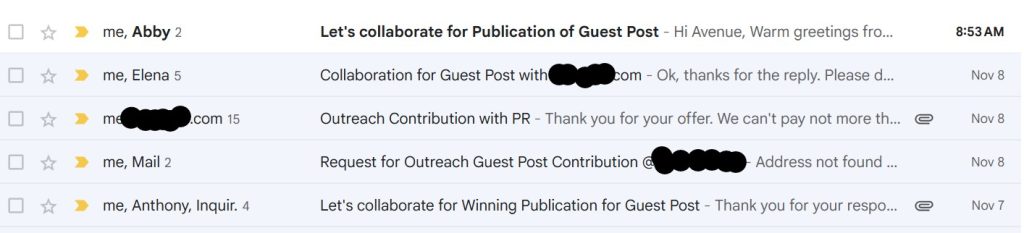
The result? One angry reply telling me to never email them again, and 499 messages that disappeared into the digital void. I felt defeated. I thought, “This whole outreach thing is a scam.”
It turns out I was wrong. The problem wasn’t outreach; it was my outreach. I was treating people like tools, not partners. I was asking for value without offering any. It was a transactional, one-sided conversation that nobody wanted to have.
Fast forward a decade, and things look very different. My team and I have used outreach to build relationships with industry giants, secure backlinks from authority sites like Forbes and Entrepreneur, and drive millions of visitors to our content.
What changed? My mindset.
I stopped blasting and started building. I stopped asking and started giving. And that’s what this guide is all about. We’re going to dissect the best outreach strategies that work today, not five years ago.
We’ll move beyond the generic “spray and pray” and into a world of genuine connection, data-driven decisions, and measurable results.
Forget everything you think you know about cold outreach. We’re about to build a relationship-making machine.
Why Your Old Outreach Strategy Is Failing
Before we dive into the “how,” let’s address the “why.” Why do so many outreach campaigns fail? It usually boils down to a few common mistakes. The average office worker receives over 120 emails per day. Top-tier bloggers, journalists, and influencers?
That number is likely double or triple.
Your email is not just competing for attention; it’s competing for survival.
Here’s where most people go wrong:
It’s All About “Me”: The email reads, “Hey, look at my great content! Can you share it? Can you link to it?” The focus is entirely on what you want, with zero consideration for what’s in it for them.
Lack of Personalization: Using [First Name] is not personalization. Real personalization shows you’ve done your homework. You know their work, their recent posts, and their audience’s interests.
The “Big Ask” on a First Date: Asking for a backlink or a major feature in the very first email is like proposing on a first date. It’s too much, too soon. You haven’t built any trust or rapport.
No Clear Value Proposition: Why should they care? If you can’t answer this question in a single sentence, your email is destined for the trash folder. Your outreach must offer clear, immediate value to the recipient.
The best outreach strategy isn’t about finding the perfect template. It’s a fundamental shift from a transactional mindset to a relational one.
It’s about playing the long game.
Building a Relationship with Best Outreach Strategy Engine
The goal of modern outreach extends far beyond simply securing a single link or a fleeting social share. Instead, it prioritizes the cultivation of a truly mutually beneficial relationship. This means fostering connections where both parties gain value, paving the way for more significant, long-term engagements.
Such enduring relationships can naturally evolve into future collaborations, where shared projects or initiatives are born; valuable introductions to other key players in the industry; and organic opportunities that emerge spontaneously, far exceeding the impact of a one-off ask.
Here’s the core framework:
Find: Identify the right people (influencers, journalists, potential partners).
Engage: Get on their radar before you ever send an email.
Offer Value: Give something before you ask for anything.
Make the Ask: Craft a personalized, irresistible pitch.
Follow Up: Persist without being a pest.
Now, let’s break down the specific, actionable strategies you can use to implement this framework and get real results.
Strategy 1: The Personalized Email Campaign That Actually Works
Email remains the king of outreach, but only if it’s done right.
A study found that emails with personalized subject lines have a 26% higher open rate. But personalization goes way beyond a name tag.
However, true personalization goes far beyond just adding someone’s name to the subject line.
It requires understanding your audience, addressing their specific needs, and creating content that feels genuinely relevant to them.
Step 1: Building a “Dream 100” List
Don’t email everyone. Email the right people. Your “Dream 100” is a curated list of the 100 most influential people, publications, or companies in your niche. These are the people whose audience you want to reach.
How to find them:
Google Searches: Use advanced search operators like "your keyword" + "top bloggers" or intitle:"resources" "your keyword".
Social Media: Search for relevant hashtags on LinkedIn, X (formerly Twitter), and Instagram. See who is leading the conversation.
SEO Tools: Use tools like Ahrefs or Semrush. Enter a competitor’s domain and look at their “Backlinks” report. This shows you exactly who is linking to content similar to yours.
For each person on your list, create a spreadsheet and track:
Name
Website/Publication
Email Address (use tools like Hunter.io or VoilaNorbert)
Social Media Profiles
A “Personalization” column (more on this in a bit)
Step 2: The “Pre-Outreach” Warm-Up
Never let your first interaction be a cold email. You need to get on their radar first. This is the engagement phase.
Follow them on social media.
Leave insightful comments on their blog posts. Don’t just say “Great post!” Add to the conversation. Ask a smart question or share a relevant experience.
Share their content on your social channels and tag them.
Reply to their newsletters. If they ask a question in their newsletter, hit reply and answer it thoughtfully.
The goal is for them to have a flicker of recognition when your name pops up in their inbox. You’re no longer a complete stranger.
Step 3: Finding Your “Hook”
This is where the “Personalization” column in your spreadsheet comes into play. Before you write a single word of your email, find a specific, recent “hook.”
Did they just publish a new article?
Were they recently featured on a podcast?
Did they share a strong opinion on LinkedIn?
Did they win an award?
Your hook is the foundation of your personalized opening line. It shows you’ve done your homework and you aren’t just spamming them.
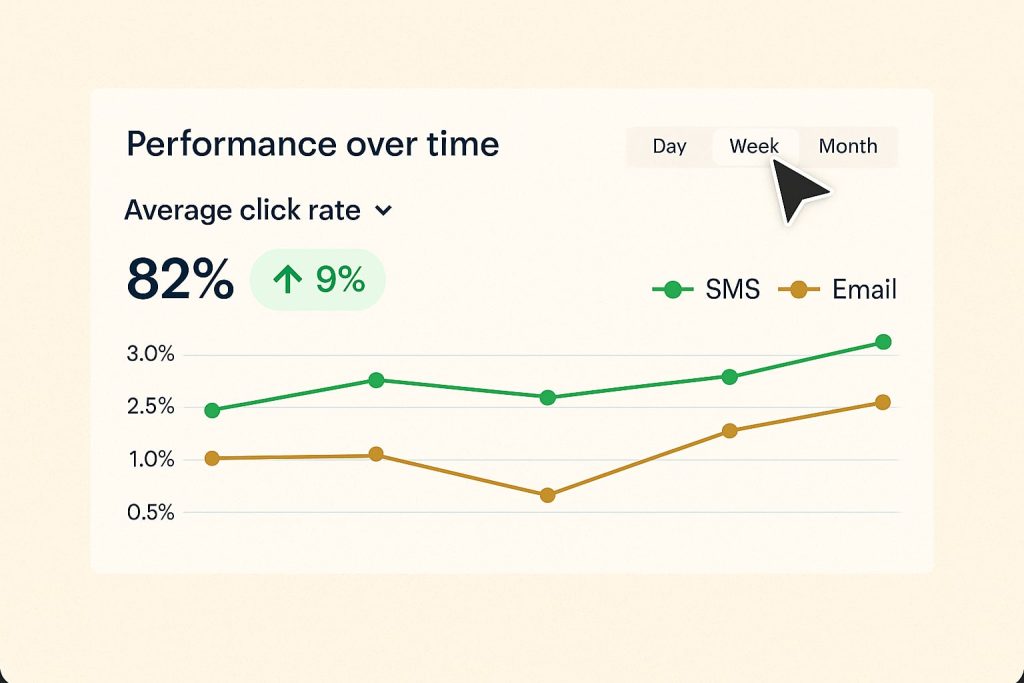
I analyze my outreach response rate and continuously refine how I drive sales and build strategic partnerships for my brand.
Step 4: Crafting the Irresistible Email
Now that you have your hook and your core offer, let’s put it all together. The key is to structure your email in a way that flows naturally from a personalized introduction to your clear value proposition.
Here’s a proven structure that combines that essential personal touch with a compelling reason for them to reply.
Subject Line: Keep it short, personal, and intriguing. Avoid clickbait.
Good: “Quick question about your post on [Topic]”
Better: “Loved your take on [Topic] on the [Podcast Name] podcast”
Bad: “AMAZING opportunity for you!”
The Body:
The Personalized Opener (Your Hook): Start with a genuine compliment or observation based on your research.
Example: “Hi [Name], I’m a big fan of your work on [Their Blog]. Your recent article on minimalist web design really resonated with me, especially the point about cognitive load.”
The Bridge (Connect to Your Value): Smoothly transition from your compliment to the reason you’re emailing.
Example: “That article actually reminded me of a comprehensive guide I just published that expands on the data visualization aspect you mentioned.”
The Value Proposition (What’s In It For Them?): This is the most crucial part. Why should they care?
Instead of: “Could you add a link to my guide?”
Try: “I noticed you linked to an older article on data visualization that has a few broken charts. My guide is fully updated for 2025 and could be a great, fresh resource for your readers. No pressure at all, but thought you might want to check it out as a potential replacement or addition.”
The Soft Call-to-Action (CTA): Make it easy for them to say yes. Don’t ask for the link directly. Ask if they’re open to looking at it.
Example: “Would you be open to taking a look?” or “Let me know if this sounds interesting, and I can send the link your way.”
The Template:
Subject: Your recent post on [Topic]
Hi [Name],
I just finished reading your article, “[Article Title],” and was blown away by your insights on [Specific Point]. I especially liked how you [Mention something specific].
I noticed that in the article, you mentioned the importance of [Related Topic]. It inspired me because my team and I recently published a data-backed case study that explores this from a different angle, showing how [Specific Outcome].
It includes [Mention 1-2 valuable things, e.g., a free template, unique data]. I thought it might be a valuable resource to share with your audience.
Would you be open to taking a quick look? Either way, keep up the amazing work!
Best,
[Your Name]
This approach works because it’s respectful, value-driven, and non-presumptuous. You’re starting a conversation, not demanding a transaction.
Strategy 2: Influencer Partnerships That Drive ROI
Influencer marketing isn’t just for B2C brands selling fashion and fitness products. When done correctly, it can be a powerful B2B outreach strategy for building credibility and driving targeted traffic.
The key is to focus on micro-influencers. These are experts with smaller, highly engaged audiences (typically 1,000 to 100,000 followers). Their recommendations often carry more weight than those from mega-celebrities. A study showed that micro-influencers can generate up to 60% higher engagement rates than macro-influencers.
Step 1: Identify Relevant Micro-Influencers
Where do these experts hang out?
LinkedIn: Search for your keywords and filter by “People.” Look for individuals who are actively posting valuable content and have high engagement.
Niche Communities: Look in Slack channels, Facebook Groups, and Subreddits related to your industry. Who are the moderators? Who consistently provides the best answers?
Podcast Guests: Who is being interviewed on the top podcasts in your field? They are certified experts.
Step 2: The “Collaboration, Not Transaction” Pitch
Your outreach to an influencer should be about co-creation and mutual benefit. Don’t just ask them to “promote my product.”
Types of Collaboration:
Co-host a webinar: Combine your expertise and your audiences.
Feature them in your content: Interview them for a blog post, case study, or video. This gives them exposure and valuable content they can share.
Create a joint resource: Develop a free ebook, template, or checklist together.
Guest posting: Offer to write a high-value, non-promotional post for their blog.
Step 3: The Influencer Outreach Email
Your email should be concise, professional, and highlight the mutual benefit.
My name is [Your Name], and I’m the [Your Title] at [Your Company]. I’ve been following your work on [Platform, e.g., LinkedIn] for a while, and I was particularly impressed with your recent discussion on [Topic].
Your expertise in [Their Area of Expertise] is exactly what our audience is looking for. We’re planning to [Your Project, e.g., host a webinar, publish an expert roundup] on [Project Topic], and I immediately thought of you.
We believe a collaboration would be a huge win-win. You’d get exposure to our audience of [Number] [Audience Description, e.g., marketing managers], and our community would get to learn from one of the best in the business.
Would you be open to a brief 15-minute chat next week to discuss this further?
Best,
[Your Name]
Real-World Example: Buffer famously grew its early user base by partnering with micro-influencers. They focused heavily on guest posting, writing over 150 guest posts in their first nine months. They didn’t just ask for a share; they provided immense value by writing high-quality content for other blogs, which in turn built their brand authority and drove referral traffic.
Strategy 3: HARO Outreach to Earn High-Authority Links
HARO (Help a Reporter Out) is a free service that connects journalists with expert sources. Three times a day, you get an email with queries from reporters at publications ranging from The New York Times and Forbes to niche industry blogs.
Responding to a HARO query is one of the most direct ways to earn powerful backlinks and media mentions. But competition is fierce.
Step 1: Set Up for Success
Sign up as a source on the HARO website.
Set up filters in your email client (e.g., Gmail). Create filters that automatically label or star emails containing your keywords. This saves you from sifting through hundreds of irrelevant queries. Keywords could include your industry, your job title, or specific topics you’re an expert on.
Step 2: Triage Queries Like a Pro
You have to be fast. Journalists work on tight deadlines.
Scan for relevance: Can you truly provide an expert answer to this query?
Check the publication: Is it a reputable outlet? Note that some queries are “Anonymous,” which can still be valuable but carry a bit more risk.
Read the requirements carefully: Do they need a PhD? Someone with 10+ years of experience? A specific demographic? Don’t waste your time (or theirs) if you don’t fit the bill.
Step 3: Craft the Perfect Pitch
Your response should make the journalist’s job as easy as possible. They want to copy and paste your quote directly into their article.
The Structure of a Winning HARO Pitch:
Clear Subject Line:HARO Response: [Query Topic]
Introduction: State who you are and why you’re qualified to answer.
Example: “Hi [Journalist’s Name], My name is Jane Doe, and I’m a certified financial planner with 15 years of experience helping millennials with debt management. I’m happy to provide a quote for your story on [Query Topic].”
The Quote: Provide your answer directly in the body of the email.
Write in clear, concise paragraphs.
Aim for 2-3 short paragraphs.
Offer a unique perspective or an actionable tip. Avoid generic advice.
Your Bio: End with your credentials in a copy-paste-ready format.
[Your Name], [Your Title] at [Your Company]
[Your Website URL]
[Your LinkedIn Profile URL]
Pro Tips: Don’t attach anything. Don’t write, “I’d be happy to answer this.” Just answer it. The less work the journalist has to do, the more likely you are to be chosen. Data from my own campaigns shows that pitches providing the full answer upfront get selected over 70% more often than those offering to talk later.
Strategy 4: LinkedIn Networking for B2B Gold
LinkedIn is more than just an online resume; it’s the most powerful B2B networking platform on the planet. With over 800 million members, your next big client, partner, or advocate is on there. But sending a generic connection request with the default “I’d like to connect with you on LinkedIn” is a missed opportunity.
Step 1: Optimize Your Profile
Your profile is your digital storefront. Before you reach out to anyone, make sure it’s polished.
Professional Headshot: Clear, friendly, and professional.
Headline: It’s more than your job title. It’s your value proposition. Instead of “CEO at Company X,” try “Helping SaaS companies reduce churn with data-driven onboarding | CEO at Company X.”
“About” Section: Tell a story. What problem do you solve? Who do you help? What are your passions?
Featured Section: Pin your best content—a keynote talk, a popular article, or a case study.
Step 2: Engage Before Connecting
Just like with email outreach, warm up your prospects.
Follow them.
Engage with their posts: Leave thoughtful comments that add to the conversation.
Ring the bell: Click the “bell” icon on their profile to get notified whenever they post. This allows you to be one of the first to engage, increasing your visibility.
Step 3: The Personalized Connection Request
You only have 300 characters. Make them count. Always add a personal note.
The Formula:[Context] + [Value]
Context: Where do you know them from? Why are you connecting?
“I saw your comment on [Influencer]’s post about SEO…”
“I enjoyed your presentation at the [Conference Name]…”
“We’re both in the [LinkedIn Group Name]…”
Value: What’s in it for them? (This is often implied by the context).
“…and I’m also passionate about building organic growth. Would love to connect and follow your insights.”
“…your point about customer-led growth was spot on. I’d love to connect and learn more from your content.”
Templates for Connection Requests:
For someone you admire: “Hi [Name], I’ve been following your work on [Topic] for a while. Your approach to leadership is really inspiring. I’d love to connect and learn from your posts.”
For a potential collaborator: “Hi [Name], I saw that we’re both in the SaaS growth space. I work with companies on [Your Specialty]. It seems like we share a lot of common ground. Would be great to connect.”
Step 4: The Follow-Up Message (After They Accept)
Don’t pitch immediately. Continue the conversation.
Thank them for connecting.
Ask an open-ended question related to their work or a recent post.
Offer a resource if it’s genuinely helpful and relevant.
Example Follow-Up:
“Thanks for connecting, [Name]! I really enjoyed your recent post on the challenges of remote team management. It’s something we’re navigating as well. Out of curiosity, what’s been your biggest learning from that experience so far?”
This approach turns a cold connection into a warm conversation, laying the groundwork for a real business relationship.
Strategy 5: Authority Link Building with “Skyscraper 2.0”
The original “Skyscraper Technique,” popularized by Brian Dean, involved finding popular content, creating something better, and asking those linking to the original to link to you instead.
“Skyscraper 2.0” adds a critical layer: match the search intent. It’s not just about being “better”; it’s about being a better fit for what the user (and Google) is looking for.
Step 1: Find Content with “Link Gaps”
Use an SEO tool like Ahrefs’ Content Explorer. Search for a keyword and filter for pages that have a lot of referring domains but have become outdated. Look for:
Outdated statistics or information.
Broken links or missing images.
Poor user experience (slow loading, no mobile optimization).
A change in search intent (e.g., the top results are now videos, but this old piece is all text).
Step 2: Create a Superior Asset
Create your content with the goal of being the definitive resource on the topic.
Update everything: Find the latest data, stats, and examples.
Improve the format: If the old post was a wall of text, make yours more scannable with better headings, bullet points, and images. Add a video, an infographic, or an interactive quiz.
Match Intent: If Google is now ranking “how-to” guides for a keyword, make sure your content is a step-by-step guide, not a theoretical discussion.
Step 3: The “Value-First” Outreach
Now, find all the sites linking to the old, outdated resource (use the “Backlinks” report in your SEO tool). Your outreach email will be a slam dunk because you’re not just asking for something; you’re helping them improve their own website.
The Template:
Subject: Broken link on your [Topic] page
Hi [Name],
I was on your site today, reading your excellent resource page on [Topic]. Super helpful stuff!
I did notice one small thing. You’re linking to a guide about [Outdated Guide’s Topic]. It looks like that link is either broken or the content is quite outdated (it still references stats from 2018).
We actually just published a completely updated guide on this for 2025. It covers [New Point 1] and [New Point 2], and includes a [Valuable Asset, e.g., free checklist].
It might make a great replacement for the old link. No pressure at all, but thought it might be a helpful heads-up for you and your readers.
Here’s the link: [Your URL]
Either way, thanks for putting together that great resource page!
Cheers,
[Your Name]
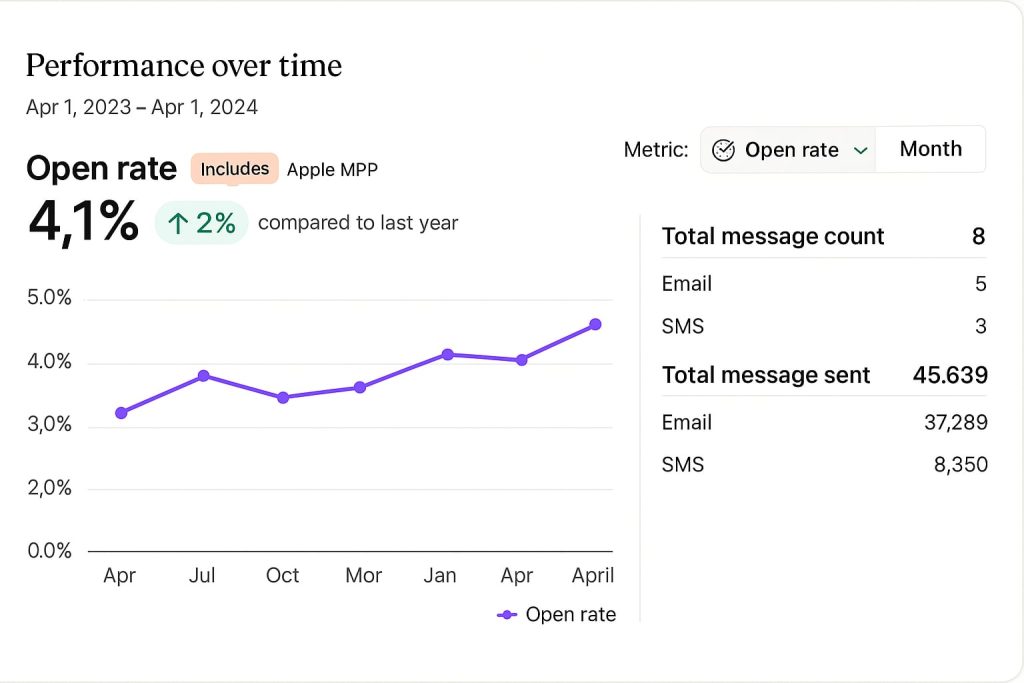
Open rate performance of my Email Outreach
This works because you are genuinely helping them. You’re pointing out a flaw on their site (a broken or outdated link) and giving them the perfect, easy solution.
Measuring What Matters: Outreach KPIs
You can’t improve what you don’t measure, and this holds especially true for your outreach campaigns. If you’re not tracking key metrics, you’re essentially flying blind. Tracking your outreach efforts is crucial for understanding what’s working, what’s not, and where you can make strategic adjustments to get better results.
Open Rate: How many people are opening your emails? This tells you if your subject lines are effective. (Aim for >40% for targeted outreach).
Reply Rate: How many are responding? This measures the effectiveness of your email body and your value proposition. (Aim for >10%).
Conversion Rate: How many replies turn into the desired outcome (a link, a meeting, a share)? This is your ultimate success metric.
Links Acquired per Campaign: A straightforward measure of your link-building success.
Referral Traffic: Use Google Analytics to see how much traffic your new links are sending to your site.
Use a simple spreadsheet or a dedicated outreach tool (like Pitchbox, BuzzStream, or Mailshake) to track these metrics.This data will help you refine your subject lines, your templates, and your overall strategy.
The Final Word: Outreach Is a Marathon, Not a Sprint
I learned my lesson that day I sent 500 terrible emails. I learned that outreach isn’t a numbers game; it’s a people game. The best outreach strategy isn’t a secret hack or a magic template. It’s a commitment to building genuine relationships to build brand communications.
It’s about doing the research. It’s about finding ways to provide value before you ever ask for anything in return. It’s about treating the person on the other end of the screen like a future partner, not a means to an end.
Yes, it takes more time. Yes, it requires more effort. But the results are not just better; they’re sustainable. You won’t just get a handful of backlinks. You’ll build a network of advocates who will champion your brand, collaborate on future projects, and open doors you never knew existed.
So, stop blasting. Start building. The results will speak for themselves.
Avenue Sangma is a passionate brand enthusiast and seasoned marketer with over 16 years of expertise in sales, retail, and distribution. Skilled in both traditional and digital marketing, he blends strategy with innovation to build impactful brands and drive sustainable business growth.