You’ve poured your heart, soul, and a significant amount of cash into building your brand. You’ve crafted the perfect logo, nailed your brand messaging, and built a loyal customer base. But what happens when someone else starts cashing in on your hard work?
It happens more often than you think. From counterfeit products to social media impersonators, the threats are everywhere. A single negative event can unravel years of effort. This isn’t just about big players like Adidas or Apple, either. Small and medium-sized businesses are prime targets.
So, how do you fight back? You need a rock-solid brand protection strategy.
This isn’t some boring legal document you file away and forget. It’s an active, ongoing battle plan to defend your most valuable asset: your brand. In this guide, I’m going to break down everything you need to know. We’ll cover what brand protection is, why it’s non-negotiable, and the exact steps you can take to safeguard your business.
Let’s dive in.
What Exactly Is Brand Protection?
Brand protection is the process of preventing unauthorized use of your intellectual property, brand assets, and identity. Think of it as a security system for your brand. It’s designed to stop counterfeiters, copyright infringers, and patent thieves from eroding your revenue, reputation, and customer trust and loyalty.
Many people think brand protection is only for corporations with massive legal teams. That’s a huge misconception. In reality, smaller brands are often more vulnerable because they lack the resources to fight back effectively.
Consider these threats:
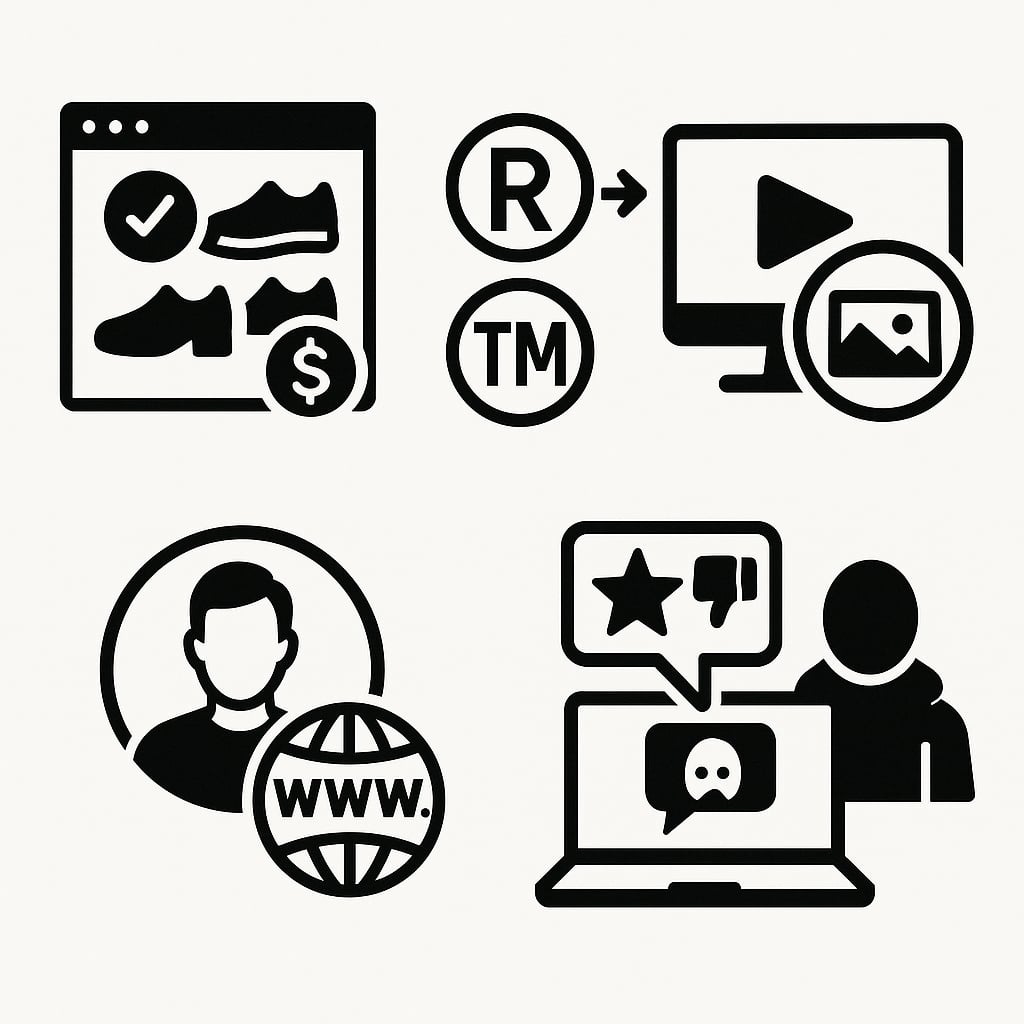
- Counterfeit Products: Someone sells fake versions of your product, often on marketplaces like Amazon or Alibaba. This not only steals your sales but also damages your reputation when the low-quality fake disappoints a customer who thinks it’s genuine.
- Trademark Infringement: A competitor uses a logo or brand name that is confusingly similar to yours to trick customers.
- Copyright Piracy: Your unique content—blog posts, videos, photos, software code—is stolen and republished without permission.
- Domain Squatting: Someone registers a domain name similar to yours (e.g., yourbrand-shop.com) to either sell it back to you at an inflated price or use it for malicious purposes.
- Reputation Damage: Fake reviews, defamatory social media posts, or impersonation accounts spread misinformation and erode customer trust.
The numbers are staggering. The global trade in counterfeit goods is worth hundreds of billions of dollars annually. This isn’t a minor issue; it’s a massive underground economy that preys on successful brands. Your brand protection strategy is your first and best line of defense.
Legal Enforcement vs. Technology-Driven Takedowns
Legal enforcement and technology-driven takedowns represent two key approaches to addressing online illegal content and harmful activity. Legal enforcement relies on regulatory frameworks and judicial processes to identify, penalize, and remove offending content, ensuring accountability through established legal channels.
This method, however, can be slower due to bureaucratic procedures. On the other hand, technology-driven takedowns utilize automated tools like AI and algorithms to promptly detect and remove content at scale.
While this approach offers speed and efficiency, it raises concerns about accuracy, overreach, and lack of transparency. Balancing these methods is crucial for effective, ethical online content regulation.
The Core Pillars of a Modern Brand Protection Strategy
A truly comprehensive brand protection strategy is rarely about a single solution; it’s far more intricate. Instead, it demands a dynamic, multi-faceted approach, addressing various vulnerabilities across different fronts.
To build an effective fortress around your brand and safeguard its integrity and value, you need to strategically fortify several key areas, including your brand pillars.
This isn’t just about reacting to threats, but proactively establishing strong defenses. To simplify this complex endeavor, I like to break it down into five essential pillars, each vital for a robust and enduring defense.
Pillar 1: Fortify Your Intellectual Property (IP)
Your intellectual property is the legal foundation of your brand. It includes your trademarks, copyrights, and patents. Without formal registration, you have very little legal ground to stand on when someone copies you.
Trademarks: Your Brand’s Identity
A trademark protects your brand’s unique identifiers: your name, logo, slogan, and even specific colors or sounds.
- What to do: The first step is to conduct a thorough trademark search to ensure your chosen name isn’t already taken. Then, file for registration with the appropriate intellectual property office, like the U.S. Patent and Trademark Office (USPTO) in the United States.
- Pro Tip: Don’t just register in your home country. If you sell internationally or plan to, register your trademark in those key markets as well. The Madrid Protocol makes it easier to file for protection in multiple countries simultaneously.
Example: Louboutin, the luxury shoe brand, famously trademarked its red-soled heels. This specific, distinctive feature is legally theirs. When another brand tried to sell shoes with red soles, Louboutin had the legal power to stop them, protecting a core part of its brand identity.
Copyrights: Protecting Your Creative Works
Copyrights cover your original creative output: blog articles, website copy, photos, videos, software code, and marketing materials. While copyright protection is automatic upon creation, formally registering your work provides much stronger legal recourse.
- What to do: For your most valuable content, register it with the U.S. Copyright Office or your country’s equivalent. It’s a low-cost process that provides substantial benefits if you ever need to sue for infringement.
- Actionable Step: Add a copyright notice (e.g., © 2025 Your Company Name. All Rights Reserved.) to the footer of your website. It’s a simple deterrent that signals you take your IP seriously.
Patents: Safeguarding Your Inventions
If your business is built on a unique product, process, or design, a patent is your strongest protection. It gives you the exclusive right to make, use, and sell your invention for a set period.
- What to do: Patent law is complex. This is where you absolutely need an experienced patent attorney. They can help you navigate the application process and ensure your filing is as strong as possible.
Pillar 2: Dominate Your Digital Presence
Your brand doesn’t just exist on your website. It lives on social media, in domain names, on mobile apps, and across online marketplaces. Protecting this digital footprint is critical. To strengthen your brand presence and connect with your audience on a deeper level, consider implementing emotional branding strategies.
Secure Your Domains
Domain squatters look for brands that have forgotten to register variations of their domain name.
- What to do:
- Register Variations: Buy common variations of your domain, including different top-level domains (.com, .net, .org, .co), plural versions, and common misspellings.
- Set Up Alerts: Use a domain monitoring service to get notified if someone registers a domain that is suspiciously similar to yours. Google Alerts can work for this in a limited capacity.
- Use a Domain Lock: Enable a registry lock or transfer lock with your domain registrar. This prevents unauthorized transfers of your domain name.
Own Your Social Media Handles
Even if you don’t plan to use every social media platform, register your brand name on all major ones (Facebook, Instagram, X, TikTok, LinkedIn, Pinterest). This prevents someone else from grabbing it and either impersonating you or holding the handle hostage.
Police Online Marketplaces
Marketplaces like Amazon, eBay, and Alibaba are hotbeds for counterfeit activity.
- Amazon Brand Registry: If you sell on Amazon, enrolling in their Brand Registry program is a must. It gives you powerful tools to find and report counterfeit listings, and Amazon will act quickly to remove them. It uses your registered trademark to verify you as the brand owner.
- Monitoring Software: For broader protection, use software that automatically scans major marketplaces for unauthorized sellers and counterfeit products. Services like Red Points or Corsearch specialize in this.
Pillar 3: Build and Defend Customer Trust
Your reputation is fragile. It takes years to build and only seconds to destroy. Protecting it means actively managing how your brand is perceived online and ensuring customers have a safe experience.
Monitor and Manage Your Reputation
You need to know what people are saying about you.
- Set Up Listening Posts: Use social listening tools (like Brand24 or Mention) to track mentions of your brand, products, and key executives across the web. Don’t forget to set up Google Alerts for free, basic monitoring.
- Encourage and Manage Reviews: A flood of positive, authentic reviews is a great defense against the occasional fake negative one. Use tools to request reviews from happy customers. When a negative review does appear, respond professionally and quickly. Show that you’re listening and eager to solve the problem.
Cybersecurity as a Brand Protection Tool
A data breach is one of the fastest ways to destroy customer trust. If customers’ personal information is stolen from your systems, the damage to your reputation can be catastrophic.
- Essential Cybersecurity Tips:
- Use HTTPS: Encrypt your entire website with an SSL certificate. It’s a basic standard that customers now expect.
- Secure Payment Processing: Use a trusted, PCI-compliant payment gateway like Stripe or PayPal. Never store credit card information on your own servers.
- Regularly Update Everything: Keep your CMS (like WordPress), plugins, and themes updated to patch security vulnerabilities.
- Enforce Strong Passwords: Require strong passwords for all user accounts, both for customers and your internal team. Implement two-factor authentication (2FA) wherever possible.
Example: The 2017 Equifax data breach exposed the personal information of 147 million people. The company’s failure to patch a known software vulnerability led to a monumental loss of trust and cost them billions in fines and settlements. It serves as a harsh reminder that cybersecurity is inextricably linked to brand health.
Pillar 4: Proactive Monitoring and Enforcement
You can’t protect what you can’t see. A passive approach to brand protection is a failing one. You need to be actively looking for infringements and have a clear plan to deal with them when you find them.
The Monitor-Detect-Act Framework
- Monitor: Continuously scan the digital world for potential threats. This is where automated tools are invaluable. They can monitor:
- Online Marketplaces: For counterfeits and unauthorized sellers.
- Social Media: For impersonation accounts and brand abuse.
- Domains: For cybersquatting.
- Web Content: For copyright infringement (plagiarism).
- Paid Ads: For competitors bidding on your branded keywords.
- Detect & Analyze: Once a potential infringement is flagged, a human needs to analyze it. Is it a genuine threat or a false positive? Is it a high-priority issue (like a counterfeit seller) or a low-priority one (like a blogger who forgot to credit your image)?
- Act: Based on the analysis, take appropriate action. Your response should be tiered.
- Level 1: Cease and Desist Notice: For most minor infringements, a formal but polite “cease and desist” letter or email is the first step. You inform the infringer that they are violating your IP and demand they stop. Often, this is enough to resolve the issue.
- Level 2: Platform Takedown Request: Use the official channels provided by platforms like Amazon, Instagram, or domain registrars. For example, file a DMCA takedown notice for copyright infringement or use Amazon’s Brand Registry to report a counterfeit.
- Level 3: Legal Action: For serious, willful, or repeat offenders who ignore your initial requests, it’s time to involve your lawyer. This is the most expensive option, but sometimes it’s necessary to show you’re serious about defending your rights.
Pillar 5: Prepare for a Crisis
No matter how good your defenses are, a crisis can still happen. A negative story could go viral, a product could have a major defect, or a data breach could occur. A crisis management plan helps you respond swiftly and effectively to minimize the damage.
Steps for Effective Crisis Management
- Identify Your Crisis Team: Who is in charge when a crisis hits? This should include key people from legal, marketing, communications, and leadership. Everyone needs to know their role.
- Develop a Communications Plan: How will you communicate with customers, employees, and the media? Prepare template statements for different scenarios. The key is to be transparent, honest, and quick. A delayed or dishonest response is fuel on the fire.
- Be First and Be Fast: Take control of the narrative. Issue a statement acknowledging the problem before rumors can spiral out of control. Explain what happened, what you’re doing to fix it, and how you’ll prevent it from happening again.
- Monitor Sentiment: Use your social listening tools to track the conversation in real-time. This helps you gauge public sentiment and adjust your response as needed.
- Post-Mortem Analysis: After the crisis subsides, analyze what went wrong and how you can improve. Update your processes and your crisis plan based on what you learned.
Case Study: When KFC in the UK ran out of chicken in 2018, it was a potential PR disaster. Instead of hiding, they ran a full-page ad in newspapers with a picture of an empty KFC bucket and the letters rearranged to say “FCK.” It was a brilliant move—humorous, apologetic, and perfectly on-brand. They took control of the story and turned a massive operational failure into a celebrated marketing win.
Putting It All Together: Your Actionable Brand Protection Checklist
Feeling overwhelmed? Don’t be. You can start building your strategy today. Here is a step-by-step checklist to get you going.
Phase 1: The Foundation (First 3 Months)
- Conduct an IP Audit: List all your brand assets—name, logo, slogans, products, content.
- Perform Trademark Searches: Ensure your brand name and logo are unique.
- File for Trademark Registration: Start the process in your primary markets.
- Register Domain Variations: Secure key TLDs, misspellings, and plural versions of your domain.
- Secure Social Media Handles: Register your brand name on all relevant platforms.
- Implement Basic Cybersecurity: Install an SSL certificate and use a secure payment gateway.
Phase 2: Active Defense (Months 3-6)
- Enroll in Amazon Brand Registry (if applicable).
- Set Up Google Alerts for your brand name, products, and key personnel.
- Add Copyright Notices to your website and content.
- Develop a Review Management Process: Start actively encouraging and responding to reviews.
- Draft a Cease and Desist Template with your legal counsel.
Phase 3: Ongoing Vigilance (Long-Term)
- Invest in Monitoring Software: Automate the scanning of marketplaces, social media, and the web.
- Create a Basic Crisis Management Plan: Identify your team and draft initial communication templates.
- Conduct Regular Security Audits: Keep your website and software updated.
- Train Your Team: Make sure your marketing and customer service teams know how to spot and report potential infringements.
- Review and Expand IP Registrations as your brand grows into new markets or product lines.
Conclusion
Your brand is more than just a name or a logo. It’s the promise you make to your customers. Protecting it is not an expense; it’s an investment in the long-term health and profitability of your business.
By fortifying your intellectual property, securing your digital presence, building customer trust, and implementing a system for monitoring and enforcement, you solidify your brand development strategy with a powerful defense against those who would profit from your hard work.
Start with the basics. Register your trademarks, secure your domains, and listen to what people are saying about you online. As you grow, your brand protection strategy can evolve with you, becoming more sophisticated and comprehensive over time. The important thing is to start now. Your brand is worth it.