Let’s get real for a second. You could have the best product or service on the planet, but if your brand is weak, you’re essentially invisible.
A strong brand is not just a cool logo or a catchy tagline; it’s the entire experience your customers have with your business. The way brands communicate with consumers is what makes them choose you over a competitor, even if your price is a bit higher.
So, how do you build a brand that people not only remember but also trust and love? It’s all about strategy.
A solid brand development strategy is your roadmap to building a memorable and profitable brand. Think of it like this: without a map, you might wander around aimlessly, hoping to stumble upon your destination. With a map, you can plot the most efficient course, avoid roadblocks, and reach your goal faster. Data backs this up. Consistent brand in business presentation across all platforms can increase revenue by up to 23%. That’s a number you can’t ignore.
In this guide, we’re going to break down everything you need to know about creating a powerful brand development strategy. We’ll cover everything from digging deep into audience research to building a bulletproof digital presence. You’ll get actionable steps, real-world examples, and the frameworks you need to make it happen.
What is a Brand Development Strategy?
Before we dive into the deep end, let’s align on what we’re talking about. A brand development strategy is the long-term plan for achieving specific brand goals related to your brand’s perception in the market. It’s a deliberate process of shaping consumer opinion to build brand equity, awareness, and customers loyalty.
This isn’t a one-and-done task. It’s a continuous process of creating, maintaining, and enhancing your brand. It involves understanding who you are, who your audience is, and how you want to be seen.
The goal? To move from being just another option to being the only option for your target customer. Let’s get started.
Step 1: Deep-Dive Audience Research
You can’t build a brand for everyone. If you try, you’ll end up connecting with no one. The foundation of any successful brand strategy and marketing strategy is a profound understanding of your target audience. You need to know them better than they know themselves.
Creating Detailed Buyer Personas
A buyer persona is a semi-fictional representation of your ideal customer based on market research and real data. This isn’t just about demographics like age and location. You need to go deeper.
What to include in your buyer personas:
- Demographics: Age, gender, income, location, education level.
- Psychographics: Values, beliefs, interests, lifestyle, personality traits.
- Goals: What are they trying to achieve, personally and professionally?
- Challenges & Pain Points: What problems are they facing that you can solve?
- Watering Holes: Where do they hang out online? (e.g., LinkedIn, Instagram, specific forums, blogs they read).
- Motivations: What drives their purchasing decisions? Is it price, quality, status, or convenience?
Actionable Steps:
- Survey Your Existing Customers: They’ve already chosen you. Find out why. Use tools like SurveyMonkey or Google Forms to ask about their challenges, goals, and what they love about your product.
- Analyze Your Website and Social Media Analytics: Tools like Google Analytics and the native analytics on social platforms provide a wealth of demographic and interest data. Look at who is visiting your site and engaging with your content.
- Conduct Interviews: Talk to real people. A 15-minute conversation with a customer, a potential customer, or even someone who chose a competitor can provide insights you’d never get from data alone.
- Listen to Social Conversations: Use social listening tools to monitor mentions of your brand, your competitors, and relevant keywords. What are people saying? What are their frustrations?
Example:
Imagine you’re a SaaS company selling project management software. A persona might be “Project Manager Pete,” a 35-year-old manager at a mid-sized tech company. His pain point is disorganized teams and missed deadlines. He values efficiency and clear communication. He hangs out on LinkedIn and reads industry blogs like the Project Management Institute. Your brand’s messaging, features, and content should all be designed to solve Pete’s problems.
Step 2: Define Your Brand Positioning
Once you know who you’re talking to, you need to decide what you want to say. Brand positioning is the space you occupy in your customer’s mind. It’s how you differentiate yourself from the competition.
Your positioning statement is an internal tool that guides your marketing efforts. A simple formula for this is:
For [Target Audience], [Your Brand] is the [Category/Industry] that offers [Brand Promise/Benefit] because [Reason to Believe].
Finding Your Unique Value Proposition (UVP)
Your UVP is the core of your positioning. It’s the primary reason a customer should buy from you. It’s a clear statement that describes the benefit you offer, how you solve your customer’s needs, and what distinguishes you from the competition.
Actionable Steps:
- Analyze Your Competitors: Make a list of your top 3-5 competitors. What are their UVPs? What are their strengths and weaknesses? Look for gaps in the market. Where are they failing to meet customer needs? That gap is your opportunity.
- Identify Your Strengths: What do you do better than anyone else? Is it your customer service, your innovative technology, your sustainable practices, or your price point? Be honest.
- Connect Your Strengths to Customer Needs: Your unique strength is only valuable if it solves a customer’s problem or fulfills a desire. The intersection of what you do best and what your audience needs is where your UVP lives.
Example:
Remember Dollar Shave Club? The razor market was dominated by giants like Gillette. Dollar Shave Club’s positioning was brilliant.
- Target Audience: Men tired of overpaying for razors.
- Brand Promise: High-quality razors for a few bucks a month, delivered to your door.
- Reason to Believe: A simple subscription model and viral, hilarious marketing that spoke directly to their audience.
Their positioning statement might have looked something like: “For young, savvy men, Dollar Shave Club is the shaving brand that delivers great razors for a fair price, because we cut out the retail middleman and marketing gimmicks.”
Step 3: Build Your Brand Identity
Brand identity is the combination of all the tangible elements a company develops to convey the right image to its audience. These elements include everything from logos, colors, and typography to taglines and messaging, all working together to create a cohesive impression. It’s the visual and verbal representation of your brand’s essence, carefully crafted to ensure it resonates with consumers and communicates the values and personality of your business effectively.
Visual Identity
This is what most people think of when they hear “branding.” It’s the look and feel.
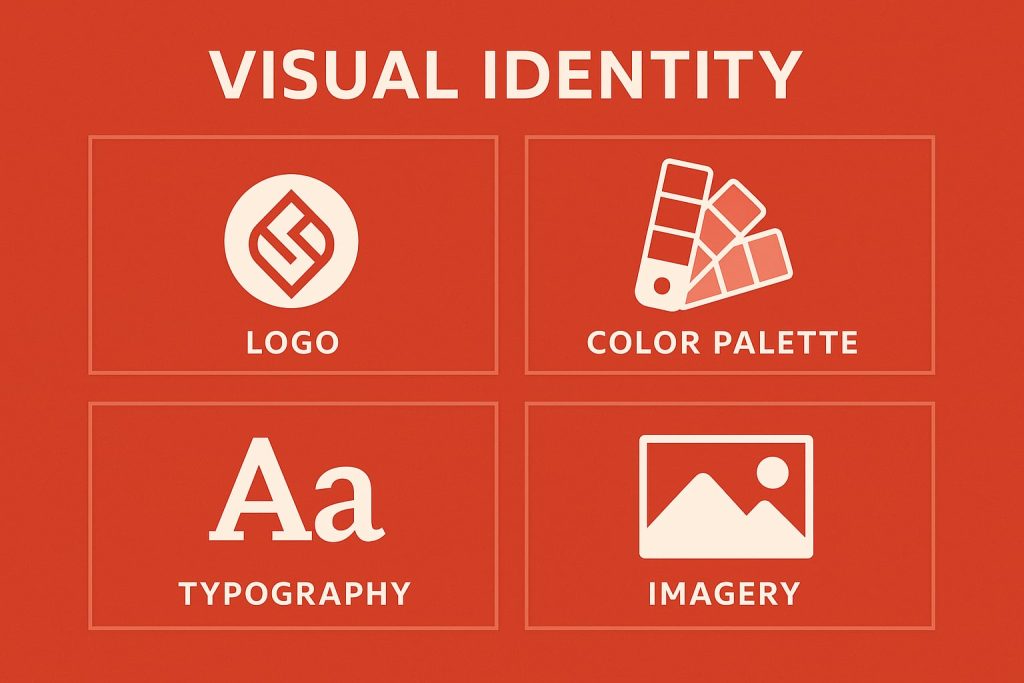
- Logo: Your logo is your brand’s signature. It should be simple, memorable, and scalable.
- Color Palette: Colors evoke emotion. A study found that color increases brand recognition by up to 80%. Choose a primary and secondary palette that reflects your brand’s personality (e.g., blue for trust, green for nature/health, red for energy).
- Typography: Your fonts communicate a mood. Are you modern and minimalist (sans-serif) or classic and traditional (serif)?
- Imagery: The photos, illustrations, and icons you use should be consistent in style and tone.
Verbal Identity: Your Brand Voice and Messaging
How your brand speaks is just as crucial as how it looks visually. Your brand voice is the distinct personality that shines through in all your communication, from website copy to social media posts. It’s what makes your brand feel human and relatable to your audience.
Actionable Steps:
- Define Your Brand Personality: If your brand were a person, what would they be like? Choose 3-5 adjectives. Are you playful, authoritative, sophisticated, or friendly?
- Create a Voice Chart: This can be a simple table that defines your personality traits and shows how to apply them.
- Characteristic: Friendly
- Do: Use conversational language, contractions, and address the reader as “you.”
- Don’t: Use overly formal language or corporate jargon.
- Develop Core Messaging: This includes your tagline, value propositions for different products/services, and an “elevator pitch” that everyone in your company can use. Your messaging should consistently reinforce your brand positioning.
Example:
Mailchimp has an iconic brand identity. Their logo (Freddie the chimp) is friendly and recognizable. Their color palette is bright and cheerful (yellow and black). Their brand voice is helpful, humble, and a little bit quirky. This cohesive identity makes their powerful marketing automation tool feel accessible and less intimidating, which perfectly aligns with their target audience of small businesses.
Step 4: Master Differentiation in a Crowded Market
Standing out in today’s crowded marketplace isn’t just an option—it’s an absolute necessity. Differentiation goes beyond just being different; it’s about creating a meaningful and memorable distinction between your brand and your competitors. It’s the process of ensuring your brand holds a unique position in the mind of the consumer, making it clear why they should choose you over others. Whether it’s through your values, your product quality, or the experience you offer, successful differentiation ensures your brand resonates and remains top of mind.
You can differentiate your brand in several ways:
- Product/Service: Offer a feature, quality, or design that no one else has. Apple is a master of this, differentiating through superior design and user experience.
- Customer Service: Zappos built its entire brand around legendary customer service, offering free shipping both ways and a 365-day return policy. This created a fiercely loyal customer base.
- Price: This can be a tricky one. Differentiating on being the cheapest (like Walmart) can lead to price wars and perceived lower quality. Differentiating on being premium (like Rolex) requires exceptional quality and brand equity.
- Storytelling: A compelling brand story can create a powerful emotional connection. TOMS Shoes differentiated itself not just with its product, but with its “One for One” business model. Buying their shoes felt like participating in a cause.
- Niche Market: Instead of trying to serve a broad market, focus on a very specific niche. A company that sells high-performance hiking gear just for women will differentiate itself from a general sporting goods store.
Actionable Steps:
- Conduct a SWOT Analysis: Analyze your brand’s Strengths, Weaknesses, Opportunities, and Threats relative to your competition.
- Map the Customer Journey: Understand every touchpoint a customer has with your brand, from awareness to purchase and beyond. Where can you create a surprisingly delightful experience that your competitors are overlooking?
- Choose Your Differentiation Battlefield: You can’t be the best at everything. Pick one or two areas of differentiation and focus all your energy on owning them.
Step 5: Dominate with a Digital Branding Strategy
Your digital presence is your brand for a huge portion of your audience. A digital branding strategy ensures you are presenting a consistent and compelling brand experience across all online channels.
Content Marketing
Content marketing is the engine of digital branding. It’s about creating and distributing valuable, relevant, and consistent content to attract and retain your target audience. It’s not about selling; it’s about providing value. Over 90% of B2B marketers use content marketing.
Types of Content:
- Blog Posts & Articles: Great for SEO, thought leadership, and educating your audience.
- Videos: Highly engaging. Can be used for tutorials, behind-the-scenes content, customer testimonials, and more.
- Social Media Content: Tailor your content to the platform. LinkedIn is for professional insights, Instagram is for visuals, and TikTok is for short, entertaining videos.
- Podcasts: A fantastic way to build a deep connection with your audience through long-form audio content.
- Ebooks & Whitepapers: Excellent for lead generation and demonstrating deep expertise.
Social Media Presence
Choose your platforms wisely and try to be active on every platform can spread your efforts too thin. Instead, focus your energy on the places where your audience is most engaged with social media marketing strategies. For example, if your audience spends most of their time on Instagram or LinkedIn, prioritize those platforms to maximize your impact.
Being selective allows you to connect meaningfully rather than stretching yourself across channels that may not serve your goals.
Actionable Steps:
- Create a Content Calendar: Plan your content in advance. This ensures consistency and alignment with your overall marketing campaigns.
- Focus on Engagement, Not Just Followers: It’s better to have 1,000 engaged followers than 10,000 who ignore you. Ask questions, run polls, and respond to comments. Build a community.
- Maintain Visual and Verbal Consistency: Use your brand’s colors, fonts, and voice across all platforms. Your Instagram feed should feel like it belongs to the same brand as your LinkedIn page.
Search Engine Optimization (SEO)
Search Engine Optimization (SEO) is a strategic process focused on enhancing your website’s visibility within search engine results pages, primarily on platforms like Google and Bing. The ultimate goal of effective SEO is to ensure that when your target audience actively searches for information, services, or solutions related to the challenges your business addresses, your website appears prominently.
By optimizing your online presence, you significantly increase the likelihood of being the very first answer or resource they encounter, establishing your credibility and directly connecting users with the solutions you provide. This critical practice involves making your website more attractive and understandable to search engines so they can accurately index and rank your content for relevant queries.
- Keyword Research: Gain a clear understanding of the exact terms and phrases your audience uses when searching for information relevant to your business or industry. These specific keywords and expressions reflect how potential customers think, what they prioritize, and the language they trust when seeking solutions. By aligning with these search habits, you can better connect with your target audience and ensure your content speaks directly to their needs and expectations.
- On-Page SEO: Optimize your website by focusing on page SEO with titles, meta descriptions, headings, and content, ensuring they are enriched with your target keywords. Craft compelling titles that grab attention while including relevant keywords. Write clear, engaging meta descriptions that not only include keywords but also encourage clicks. Use headings strategically to structure your content and make it easier for readers to follow, while seamlessly incorporating key terms. Finally, ensure your content naturally integrates target keywords to improve relevance without sacrificing readability..
- Technical SEO: Ensure your site loads quickly and efficiently for all users, as page speed significantly impacts user experience and search engine rankings with technical seo strategy. It should also be fully mobile-friendly, providing a seamless and responsive experience across various devices and screen sizes. Finally, optimize your site’s structure and technical elements to make it easy for search engine bots to discover, crawl, and index your content effectively.
Example:
HubSpot is a content marketing powerhouse. They offer a massive library of free resources—blogs, ebooks, templates, and courses—all designed to help marketers and salespeople. They rarely talk about their product directly in this content. Instead, they provide immense value, building trust and authority. When their audience is finally ready to buy a CRM or marketing automation tool, HubSpot is the first brand they think of. That is the power of a digital branding strategy done right.
Step 6: Plan for Long-Term Growth and Evolution
A brand is not a static logo or a one-time campaign; it is a dynamic, living entity that continually interacts with its audience and the market. To maintain its vitality and appeal, it absolutely needs to evolve and adapt over time to stay relevant in an ever-changing landscape. Therefore, your comprehensive long-term strategy should proactively include robust plans for consistently measuring its success and thoughtfully adapting to emerging market shifts, technological advancements, and evolving consumer preferences in brand marketing. This continuous evaluation and refinement are key to sustaining its impact.
Measuring Brand Performance
You can’t improve what you don’t measure. Tracking the right metrics is crucial.
- Brand Awareness Metrics:
- Direct Traffic: People typing your URL directly into their browser.
- Social Mentions: How often your brand is being talked about online.
- Search Volume Data: The number of people searching for your brand name.
- Customer Loyalty & Retention Metrics:
- Customer Lifetime Value (CLV): The total revenue you can expect from a single customer account. if you have detailed knowledge of Customer Lifetime Value (CLV).
- Net Promoter Score (NPS): A survey that asks customers how likely they are to recommend your brand.
- Engagement Metrics:
- Website Analytics: Time on page, bounce rate.
- Social Media Engagement: Likes, comments, shares.
Adapting and Evolving Your Brand
In the dynamic business landscape, markets are constantly evolving, customer preferences can shift rapidly, and new competitors frequently emerge. For a brand to remain relevant and successful, it must possess the agility to adapt to these ongoing changes.
This means being prepared to pivot strategies, refresh messaging, and even reconsider core offerings as external factors evolve. Understanding the overall importance of branding is key to navigating these shifts.
Actionable Steps:
- Schedule Regular Brand Audits: At least once a year, conduct a full audit of your brand. How is your positioning holding up? Is your messaging still resonating? Is your visual identity feeling dated?
- Stay on Top of Trends: Keep an eye on industry, cultural, and technological trends. How might they impact your brand?
- Listen to Feedback: Continuously solicit and listen to feedback from customers and employees. They are on the front lines and will often spot the need for change before you do.
Example:
Old Spice is a classic case of brand evolution. For decades, it was seen as “your grandpa’s aftershave.” Facing irrelevance, they completely rebranded with the “The Man Your Man Could Smell Like” campaign. They kept the name and iconic logo but changed everything else—the target audience (women buying for their men), the messaging (humorous and absurd), and the channel (viral video). The result was a massive resurgence and a 107% increase in sales. They didn’t abandon their heritage, but they evolved to connect with a new generation.
Brand Development Example
Another strong example of brand development is Coca-Cola’s ability to consistently refresh its brand image while maintaining its core identity. From its earliest days, senior marketers understood the power of emotional connection and widespread availability. While competitors focused on product features, Coca-Cola’s campaigns, orchestrated by seasoned strategists, positioned the drink not just as a beverage but as a symbol of joy, connection, and Americana.

Image from Coca-Cola Official campaign
Think of the iconic “Share a Coke” campaign, which took a century-old brand and made it deeply personal, or their classic holiday advertising that cemented their association with festive cheer. This long-term, sophisticated differentiation, driven by a deep understanding of consumer psychology, has allowed Coca-Cola to remain a global leader for over a century, proving that consistent, emotionally resonant brand development is key to enduring success.
Your Brand is Your Most Valuable Asset
Building a powerful and recognizable brand is an intricate process that certainly doesn’t happen overnight. It’s more accurately described as a marathon, a sustained effort over time, rather than a quick sprint. This journey requires a strategic, deliberate, and consistent commitment applied across every single touchpoint of your business, from your logo and website to customer service interactions and marketing campaigns by making 10X benefits. It involves a continuous effort to shape perceptions and build lasting relationships with your audience.
Let’s recap the journey:
- Start with Your Audience: Know exactly who you are talking to.
- Nail Your Positioning: Define your unique place in the market.
- Build a Cohesive Identity: Align your visuals and your voice.
- Find Your Differentiation: Give customers a clear reason to choose you.
- Execute a Digital Strategy: Meet your audience where they are with valuable content.
- Plan for the Long Haul: Measure, adapt, and evolve.
Your brand is the promise you make to your customers. Your brand development strategy is how you keep that promise. By following these steps, you’re not just building a logo or a website; you’re building a relationship.
You’re building trust. And in the end, trust is the ultimate currency.
Now go build a brand that matters.