It costs five times more to attract a new customer than to keep an existing one.
Let that sink in. While many businesses pour their resources into customer acquisition, the real key to sustainable business growth often lies in customer retention. If you’re focused solely on bringing new people through the door, you’re missing a massive opportunity to build a loyal customer base that drives consistent revenue.
This guide is designed to be your go-to resource for building a powerful customer retention strategy. We’ll break down what customer retention is, why it’s crucial for your business, and how to measure it effectively.
Most importantly, I’ll provide a comprehensive list of actionable strategies you can implement right away to keep your customers coming back for more. Whether you’re a small startup or a large enterprise, mastering customer retention is a non-negotiable for long-term success.
What Is Customer Retention?
Customer retention refers to the collection of activities and strategies a business uses to prevent customers from defecting to a competitor. It’s about encouraging your existing customers to continue buying from you over an extended period. A successful retention strategy transforms first-time buyers into loyal, repeat customers who not only purchase again but also become advocates for your brand.
Think of it as nurturing a relationship. You wouldn’t meet someone once and expect them to be your friend for life without any further effort. Similarly, the customer journey doesn’t end at the point of purchase. It’s the beginning of a long-term relationship that requires ongoing attention, value, and positive experiences to flourish.
What Is the Purpose of Customer Retention Strategies?
The primary brand goals of a customer retention strategy is to maximize the lifetime value of each customer, but the benefits extend far beyond that. Here’s why focusing on retention is one of the smartest moves you can make:
- Increased Profitability: Retaining customers is significantly more cost-effective than acquiring new ones. A mere 5% increase in customer retention can boost profits by 25% to 95%. Loyal customers also tend to spend more over time.
- Enhanced Customer Lifetime Value (CLV): The longer a customer stays with you, the more they spend that’s called customer lifetime value or CLV. By fostering loyalty, you increase the total revenue you can expect from a single customer account.
- Powerful Word-of-Mouth Marketing: Happy, loyal customers are your best marketers. They are more likely to recommend your products or services to friends, family, and colleagues, providing you with high-quality, free advertising.
- Valuable Feedback: Long-term customers have a deeper understanding of your business and can provide invaluable feedback for improvement. They are invested in your success and are often more willing to share insights.
- Competitive Advantage: In a crowded market, a strong base of loyal customers can be a formidable competitive advantage. It creates a stable revenue stream and makes your business more resilient to market fluctuations.
The Customer Retention Formula
To improve your customer retention, you first need to measure it. The Customer Retention Rate (CRR) is a key metric that shows the percentage of customers you’ve retained over a specific period.
Here’s the formula: given in the image

Image Created
CRR = [ ( (Number of Customers at End of Period – Number of New Customers Acquired During Period) ) / Number of Customers at Start of Period ] x 100
Let’s break it down with an example once again for your better understand of the formula:
- You start the quarter with 200 customers.
- You acquire 50 new customers during the quarter.
- You end the quarter with 220 customers.
CRR = [ ( (220 – 50) ) / 200 ] x 100
CRR = (170 / 200) x 100
CRR = 0.85 x 100 = 85%
Your customer retention rate for that quarter is 85%.
What Is a Good Customer Retention Rate?
A “good” customer retention rate varies significantly by industry. For example, the retail industry might see an average rate of around 63%, while the SaaS industry often aims for 90% or higher.
The key is to benchmark against your industry and, more importantly, strive for continuous improvement. Tracking your CRR over time will reveal trends and show whether your retention strategies are having the desired effect.
How to Retain Customers?
To retain customers effectively, it’s essential to focus on delivering exceptional value and fostering strong relationships. Begin by understanding your customers’ needs and expectations through regular feedback and data analysis. Personalization plays a critical role; tailoring experiences, communications, and offers to individual preferences can significantly boost loyalty. Equally important is providing exemplary customer service—quick responses, resolving complaints efficiently, and exceeding expectations are key to maintaining trust.
Consistency in product or service quality helps build confidence, while proactive engagement, such as exclusive perks or loyalty programs, reinforces the value of remaining a customer.
Additionally, showcasing your brand’s mission and social responsibility can create a deeper emotional connection. Retention isn’t a one-time effort; it requires ongoing evaluation and adaptability to meet evolving customer demands and market conditions.
If you would like break everything in piece by piece, you need a great market research for your business.
28 Proven Customer Retention Strategies
Let’s dive into the core strategies.
I’ve compiled 25 powerful customer retention strategies that you can start implementing today. These tactics are designed to help you not only build lasting and meaningful relationships with your customer base but also directly contribute to a healthier bottom line through increased loyalty and repeat business.
Foundational Strategies
Foundational strategies lay the groundwork for successful customer retention by establishing trust and delivering consistent value. Start by prioritizing exceptional customer service—ensure support teams are well-trained, responsive, and equipped with the tools needed to resolve issues quickly.
Next, provide a seamless onboarding experience to set the tone for a long-term relationship, guiding customers step-by-step to understand and maximize your product’s value.
Regularly gather and act on customer feedback to identify pain points and areas for improvement. Finally, foster transparency by maintaining open, honest communication and delivering on promises, building loyalty and positioning your brand as a trusted partner.
1. Set Clear Expectations: From the very first interaction, be transparent about what your product or service can and cannot do. Under-promising and over-delivering is a classic strategy that builds trust and satisfaction.
2. Deliver Exceptional Customer Service: This is non-negotiable. 93% of customers are likely to make repeat purchases with companies who offer excellent customer service. Train your team to be empathetic, responsive, and proactive in solving problems. Make it easy for customers to get help through multiple channels.
3. Implement a Seamless Onboarding Process: For SaaS companies and service-based businesses, the first few weeks are critical. A smooth, educational onboarding process helps customers understand your product’s value quickly, reducing churn.
4. Create a Customer Feedback Loop: Actively seek out and listen to customer feedback. Use surveys, reviews, and direct conversations to understand their pain points and suggestions. More importantly, act on that feedback and let customers know you’ve heard them.
5. Personalize the Customer Experience: Use customer data to tailor your communications, recommendations, and offers. Addressing customers by name in emails is a start, but true personalization goes deeper, anticipating their needs based on past behavior.
Loyalty and Engagement Strategies
Building loyalty and fostering engagement in today’s competitive landscape requires a strategic approach centered on meaningful connections and value-driven interactions. Customers are more likely to remain loyal to brands that resonate with their values, consistently deliver exceptional experiences, and offer tangible benefits over time. This means going beyond transactional relationships and focusing on emotional connections, trust, and reciprocity.
Loyalty programs, for example, can be powerful tools when designed with the customer in mind—offering personalized rewards, exclusive benefits, and opportunities for deeper engagement.

Furthermore, content that educates, entertains, or solves problems can help position your brand as not only a service provider but a trusted partner in the customer’s journey.
The key is to create a holistic strategy that combines data-driven insights with authentic, human-centered marketing to nurture long-term relationships that drive both retention and advocacy.
6. Develop a Loyalty Program: Reward repeat customers for their business. This can be a points-based system, tiered rewards, or exclusive perks for long-term patrons. Loyalty programs make customers feel valued and give them a tangible reason to return.
7. Share Exclusive Content and Offers: Make your customers feel like insiders. Provide them with access to exclusive articles, webinars, or early-bird discounts. This reinforces their decision to be part of your community.
8. Build a Community: Create a space where your customers can connect with each other and your brand. This could be a Facebook group, a dedicated forum, or exclusive events. A strong community fosters a sense of belonging and loyalty.
9. Send Personalized Thank-You Notes: In a digital world, a handwritten note or a thoughtful, personalized email can make a huge impact. It shows a level of care that automated messages can’t replicate.
10. Remember Special Occasions: Acknowledge customer birthdays or anniversaries with a special discount or a small gift. It’s a simple gesture that shows you see them as more than just a transaction.
Communication and Education Strategies
Clear and effective communication is the foundation of any successful customer relationship, and it plays a critical role in educating your audience about your brand’s value. By delivering the right message at the right time, marketing professionals can not only nurture trust but also empower customers to make informed decisions. Education-driven communication goes beyond promotional content; it focuses on offering actionable insights, addressing pain points, and aligning your brand’s goals with your audience’s needs. In the meantime, focus on strengthening brand awareness to position your business for long-term growth and greater market impact.
This strategic approach builds credibility, fosters loyalty, and ensures that every interaction adds tangible value to the customer experience.
By leveraging tools such as data-driven segmentation, interactive content, and tailored messaging, you can convert passive readers into engaged, loyal advocates.
11. Maintain Regular, Valuable Communication: Stay in touch with your customers through newsletters, blog posts, and social media. The key is to provide value, not just sell. Share tips, industry news, and success stories. For more insights on this, explore my latest articles.
12. Educate Your Customers: Help your customers get the most out of your product. Create tutorials, how-to guides, and best-practice articles. When customers succeed with your product, they are more likely to stick around.
13. Use a CRM to Track Interactions: A Customer Relationship Management (CRM) system is essential for keeping track of every customer interaction. This allows for more personalized and context-aware communication.
14. Proactively Address Issues: Don’t wait for customers to complain. If you know there’s a widespread issue (like a shipping delay or a software bug), communicate it proactively and explain what you’re doing to fix it. Honesty builds trust.
15. Ask for Reviews: Encouraging customers to leave reviews not only provides social proof but also makes them feel that their opinion matters. It reinforces their connection to your brand.
Proactive and Advanced Strategies
Successful marketing today requires a proactive and forward-thinking approach, where brands anticipate challenges and business opportunities before they arise. Advanced strategies are rooted in data-driven insights, enabling marketing professionals to pinpoint emerging marketing trends, shifts in consumer behavior, and competitive threats with precision.
By staying ahead of the curve, marketers can not only address potential issues before they impact the customer experience but also develop innovative solutions that differentiate their brand in a crowded marketplace.
Utilizing tools like predictive analytics, dynamic campaign optimization, and customized user journeys, proactive strategies ensure that every touchpoint is purposeful and aligned with both short-term goals and long-term brand growth.
This approach fosters stronger relationships with customers, builds resilience in volatile markets, and ultimately drives measurable results in engagement, ROI, and market share.
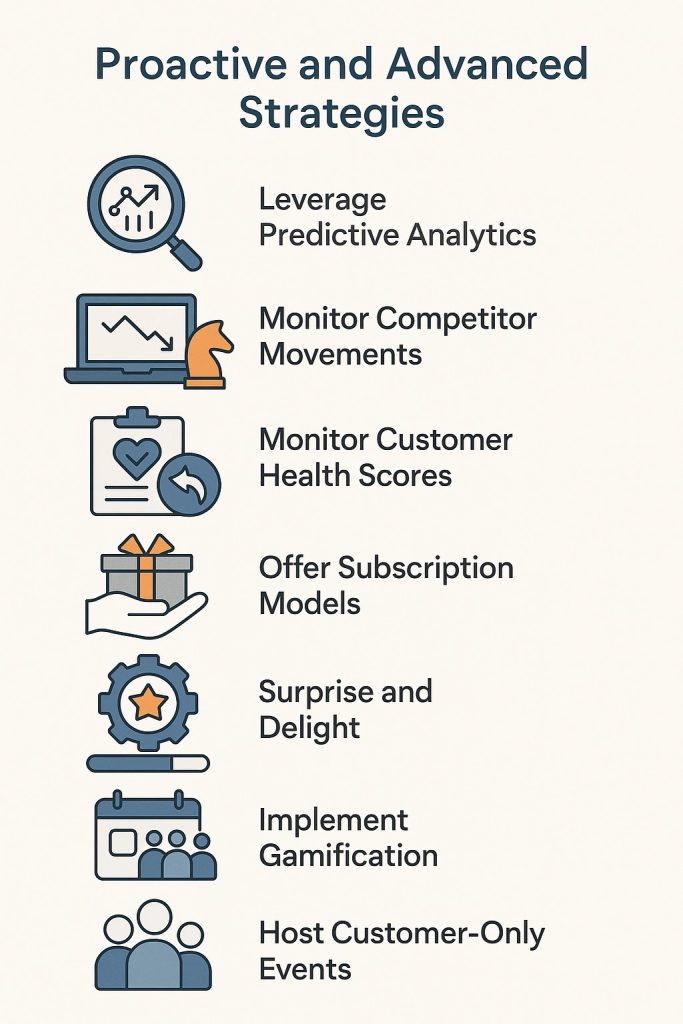
16. Leverage Predictive Analytics: Utilize predictive analytics tools to anticipate customer needs, market trends, and potential challenges. By analyzing historical and real-time data, businesses can create highly targeted campaigns that drive results.
17. Personalize at Scale: Advanced marketing automation enables personalized experiences for customers at scale. Dynamic content and AI-driven recommendations cater to individual preferences across emails, websites, and ads. You can read details how to use ChatGPT for marketing insights.
18. Monitor Competitor Movements: Keep track of competitor strategies using industry analysis tools. Proactively adjust your campaigns to maintain a competitive edge and fill market gaps they might leave open.
19. Monitor Customer Health Scores: For SaaS businesses, a customer health score is a metric that predicts whether a customer is likely to churn. It can be based on product usage, support tickets, and other engagement data. Identify at-risk customers and reach out to them before it’s too late.
20. Offer Subscription Models: If applicable, turn one-time purchases into recurring revenue with a subscription service. This model inherently builds retention by making repeat business the default.
21. Surprise and Delight: Go above and beyond expectations occasionally. This could be an unexpected upgrade, a free sample with an order, or a shout-out on social media. These memorable moments create powerful emotional connections.
22. Implement Gamification: Add game-like elements to your customer experience, such as badges, leaderboards, or progress bars. This can make interacting with your brand more engaging and fun.
23. Host Customer-Only Events: Whether virtual or in-person, exclusive events make your loyal customers feel special and strengthen their bond with your brand and each other.
Recovery and Growth Strategies
To drive recovery and long-term growth, prioritize strategies that align with evolving market conditions and consumer behaviors.
Start by leveraging data analytics to identify trends, gaps, and opportunities, enabling informed decision-making. Focus on enhancing customer retention through personalized experiences and loyalty programs, ensuring consistent engagement. Diversify marketing efforts with multi-channel campaigns that adapt to shifting preferences and regional differences. Additionally, allocate resources toward innovation, such as launching new products or services tailored to current demands you need to know product development.
By maintaining flexibility and staying proactive, businesses can not only recover but also position themselves for sustainable growth and market leadership.
24. Create a Smooth Offboarding Process: If a customer decides to leave, make the process easy and gather feedback on why they are canceling. A positive offboarding experience can leave the door open for them to return in the future.
25. Launch a Win-Back Campaign: Target past customers who haven’t purchased in a while with a special offer or a message reminding them of the value you provide.
26. Upsell and Cross-sell Strategically: Recommend relevant products or upgrades that truly enhance the customer’s experience. This approach not only boosts average order value but also strengthens trust and satisfaction.
When done right, it shows that your business understands each customer’s journey offering solutions that make their purchase more valuable, convenient, or enjoyable. Use data-driven insights to personalize these recommendations, whether through bundled offers, loyalty upgrades, or complementary add-ons.
Remember, the goal isn’t just to sell more, it’s to create meaningful value that keeps customers coming back.
27. Empower Your Employees: Give your front-line employees the authority to solve customer problems on the spot. When an employee can turn a negative experience into a positive one without needing to escalate, it builds immense customer loyalty.
28. Evolve with Your Customers: Your customers’ needs will change over time. Continuously innovate and adapt your products and services to meet their evolving expectations. Adapt to Your Customers: Customer needs will change as time progresses. Regularly innovate and modify your products and services to align with their shifting expectations. Foster a Feedback Loop: Actively seek customer feedback and use it to improve your offerings.
This creates a sense of community and shows customers that their opinions matter. Personalize the Experience: Utilize data and insights to tailor interactions and recommendations for each customer. Personalization enhances satisfaction and encourages repeat business. Create Loyalty Programs: Develop incentives that reward customers for their continued patronage.
Attractive loyalty programs can motivate customers to choose your brand over competitors. Invest in Training: Ensure that your team is well-trained in customer service principles and product knowledge. A knowledgeable and confident staff can significantly enhance the customer experience.
Great Customer Retention Policies
Implementing these strategies requires a company-wide commitment. Here are examples of policies that support a customer-centric culture:
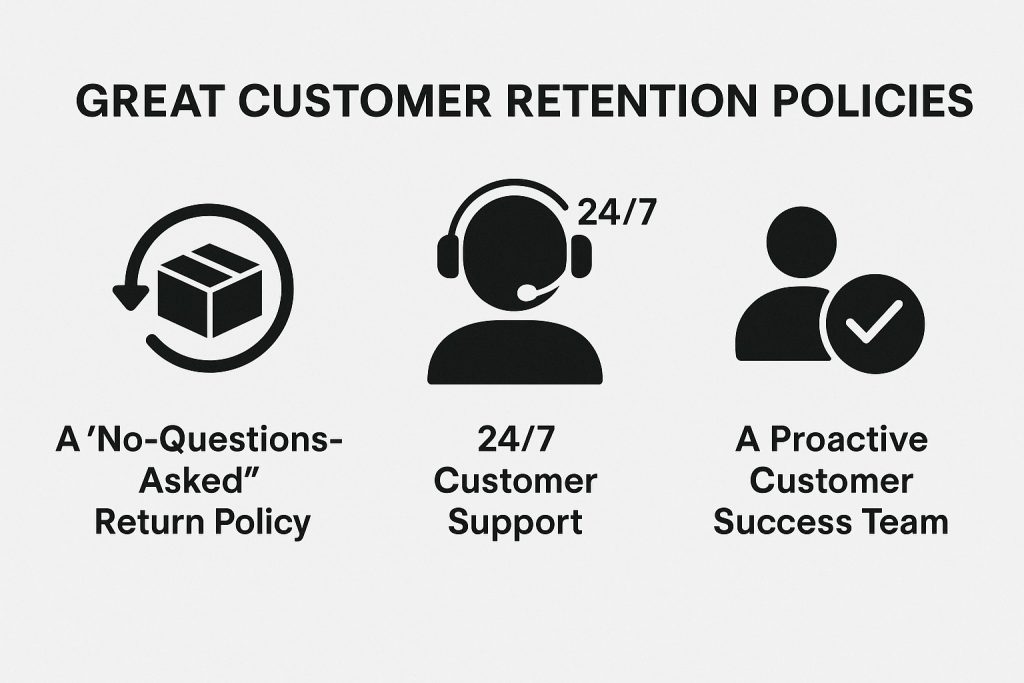
- A “No-Questions-Asked” Return Policy: This reduces the risk for customers and shows you stand behind your product.
- 24/7 Customer Support: Offering round-the-clock support demonstrates a deep commitment to customer success.
- A Proactive Customer Success Team: Instead of waiting for problems, customer success managers (CSMs) should regularly check in with clients to ensure they are achieving their goals.
The Importance of Customer Feedback
Customer feedback is a vital tool for driving continuous improvement and fostering a strong, customer-centric business. By actively listening to your audience, you can gain invaluable insights into their needs, preferences, and pain points. This information allows you to fine-tune your products, services, and overall customer experience for greater satisfaction and loyalty.
Additionally, leveraging feedback demonstrates to customers that their voices matter, building trust and engagement. Well-executed feedback mechanisms, such as surveys, reviews, and feedback forms, can also help identify emerging trends and market shifts, positioning your brand to stay ahead of competitors. Ultimately, integrating customer suggestions and addressing concerns contributes to stronger relationships, improved retention, and enhanced ROI — key metrics for success in any marketing strategy.
Importance of Effective Communications Tactics
Clear and effective communication is the backbone of successful marketing functions. To resonate with your audience, adopt techniques that emphasize clarity, empathy, and relevance.
Begin by tailoring your messages to specific audience segments, using data-driven insights to address their unique pain points and aspirations. Craft concise, compelling headlines that immediately capture attention while delivering value. Incorporating storytelling allows you to connect on an emotional level, making your brand more relatable and memorable. Additionally, leveraging visuals such as infographics or videos can simplify complex ideas and enhance engagement.
Consistency across all channels ensures that your messaging remains coherent, fostering trust and recognition. Most importantly, actively listening to customer feedback and adapting your communication style based on their preferences reinforces a customer-first approach, driving deeper connections and better results.
The Key to Lasting Growth
Customer retention isn’t just a series of tactics; it’s a mindset. It’s about building genuine, lasting relationships with the people who keep your business alive. By shifting your focus from simply acquiring customers to truly serving them, you create a loyal community that will not only drive revenue but also champion your brand for years to come.
Start by measuring your current retention rate, pick a few strategies from this list to implement, and watch your business build a foundation for sustainable, long-term growth.
If you need expert advice on tailoring these strategies for your business, feel free to book an appointment to discuss how we can drive your success.