Finding the right building materials can make or break your interior design or furniture project. Among the many options available in the market, Medium-Density Fiberboard (MDF) stands out as a highly versatile and cost-effective choice. Builders, interior designers, and homeowners across the country rely on this engineered wood product to create stunning, durable pieces without breaking the bank.
Understanding the pricing landscape is crucial before starting any renovation or construction work. The market offers a wide variety of options, from locally manufactured boards to premium imported sheets. Prices fluctuate based on thickness, brand reputation, and specific board treatments. Navigating these choices requires a solid grasp of what the local market currently offers.
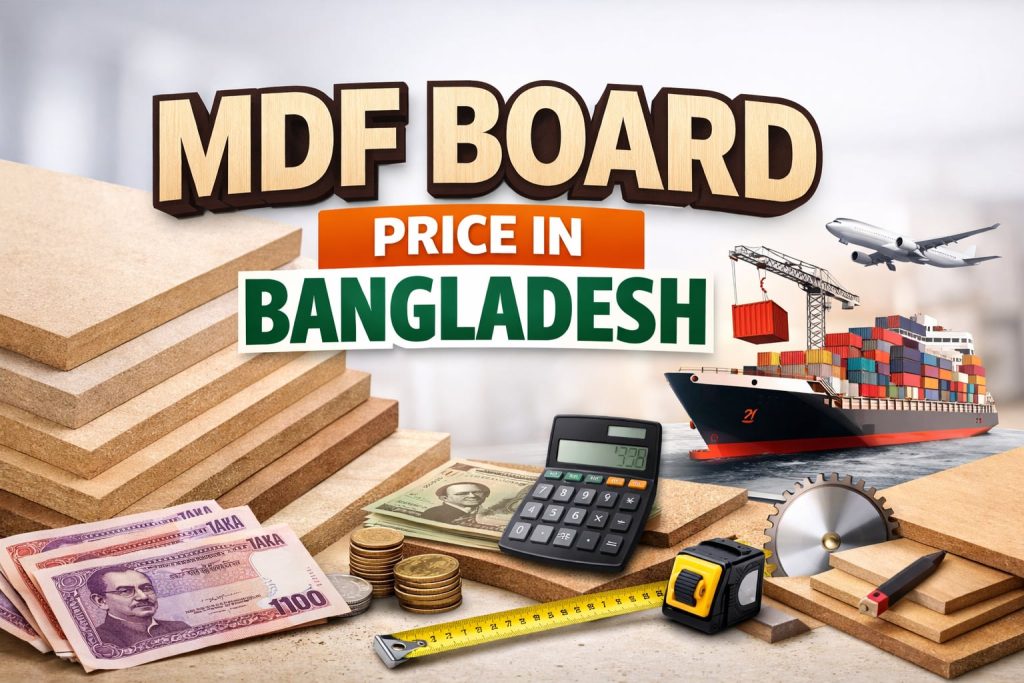
This comprehensive guide breaks down everything you need to know about MDF boards. We will explore current price ranges, compare top local brands like Akij and Partex against imported alternatives, and analyze market trends. By the time you finish reading, you will have all the information necessary to make smart, budget-friendly purchasing decisions for your upcoming projects.
What is an MDF Board?
Medium-Density Fiberboard, commonly known as MDF, is an engineered wood product. Manufacturers create it by breaking down hardwood or softwood residuals into wood fibers. These fibers are then combined with wax and a resin binder. The mixture is formed into panels by applying high temperature and pressure.
The resulting board is incredibly smooth, dense, and free of the natural defects found in solid wood, such as knots or distinct grain patterns. This uniform structure makes it an excellent material for machining, cutting, and drilling. Because it lacks a specific grain direction, you can cut MDF in any direction without worrying about splintering or tearing.
Types of MDF Boards Available
You’ll find several types of MDF boards in the Bangladeshi market. Each one is designed for different uses and settings, from basic indoor furniture to moisture-prone areas. Understanding these variations will help you choose the perfect material for your project, ensuring durability and the right finish for your needs.
Plain MDF
This is the standard, uncoated version of the board. It features a smooth, sanded surface that readily accepts paint and veneers. Plain MDF is the most budget-friendly option and works perfectly for general indoor furniture where moisture is not a concern.
Melamine-Faced MDF
Manufacturers press a melamine paper layer onto the surface of the board under high heat and pressure. This creates a pre-finished, decorative surface that mimics wood grains, solid colors, or abstract patterns. Melamine MDF is highly popular for office furniture and modern kitchen cabinets because it requires no additional finishing.
Moisture-Resistant (MR) MDF
Standard MDF absorbs water easily, which causes it to swell and degrade. Moisture-resistant MDF incorporates special water-repellent resins during the manufacturing process. While not entirely waterproof, MR-MDF handles high humidity beautifully, making it the preferred choice for bathroom vanities and kitchen sink base cabinets.
High-Density MDF (HDF)
While technically a different category, HDF is closely related. It undergoes even higher pressure during manufacturing, resulting in a thinner, stronger, and denser board. HDF often serves as the core material for laminate flooring and door skins.
Major Uses of MDF Boards
MDF’s versatility allows it to serve multiple functions across residential and commercial settings. From furniture and cabinetry to decorative mouldings and interior panelling, this engineered wood product has become a staple in modern construction and design due to its adaptability and smooth finish.
Furniture Manufacturing
The furniture industry consumes the majority of MDF produced. Wardrobes, bookshelves, TV cabinets, and bed frames frequently utilize this material. Its smooth surface provides the perfect canvas for high-gloss paints and intricate veneers.
Interior Carpentry and Cabinetry
Kitchen cabinets heavily rely on MDF, especially for the doors. Solid wood doors tend to expand and contract with temperature changes, which can cause the paint to crack. MDF remains stable, ensuring painted cabinets maintain their pristine appearance for years.
Wall Paneling and Decorative Accents
Interior designers love using MDF for decorative wall panels, wainscoting, and baseboards. Using CNC routers, carpenters can easily carve intricate 3D designs into the boards to create striking feature walls in homes and corporate offices.
Acoustic Enclosures
Due to its density, MDF possesses excellent sound-dampening qualities. Speaker manufacturers frequently use it to build subwoofer enclosures and speaker boxes, as it prevents the casing from vibrating and distorting the audio.
MDF Board Price in Bangladesh by Thickness
Pricing in the local market largely depends on the board’s thickness and size. The standard sheet size in Bangladesh is 4×8 feet (1220mm x 2440mm), though custom sizes are occasionally available for large-scale industrial orders.
Based on recent market data from suppliers like Particle Mela, prices for standard plain MDF boards generally range from ৳850 to ৳1,800 per sheet. Here is a detailed breakdown of estimated prices based on thickness for a standard 4×8 feet board.
Price Breakdown Table
| Thickness | Standard Size | Estimated Price Range (BDT) | Common Applications |
|---|---|---|---|
| 6 mm | 4 x 8 Feet | ৳850 – ৳1,000 | Drawer bottoms, cabinet backs, door skins |
| 12 mm | 4 x 8 Feet | ৳1,200 – ৳1,400 | Wall paneling, lightweight shelving, displays |
| 15 mm | 4 x 8 Feet | ৳1,450 – ৳1,600 | Office furniture, standard cabinetry, wardrobes |
| 18 mm | 4 x 8 Feet | ৳1,650 – ৳1,800 | Heavy-duty shelves, tabletops, bed frames |
Note: Prices fluctuate based on market conditions, specific brands (like Super or MRS), and regional transportation costs.
You can also read: China Tiles Price in Bangladesh
Brand-Wise Market Analysis
The engineered wood market in Bangladesh features a mix of strong local conglomerates and imported goods. Understanding the different brands helps in selecting the right quality for your budget.
Akij Board
Akij is a dominant force in the building materials sector. Their MDF and particle boards are known for consistent density and reliable finishing. Akij invests heavily in modern European machinery, ensuring their boards meet international quality standards. They command a significant portion of the premium local market.
Super Board (Superboard)
Owned by the T.K. Group, Super Board is a highly visible brand across the country. They offer a massive variety of plain and melamine-faced boards. Super Board is widely favored by mid-tier furniture manufacturers due to its excellent balance of cost and quality. Their boards are easily available even in smaller district hardware stores.
Partex Board
Partex essentially pioneered the engineered wood industry in Bangladesh. As a legacy brand, they hold immense consumer trust. Partex boards are synonymous with durability. They produce exceptionally high-quality moisture-resistant variants that interior designers frequently specify for premium commercial projects.
Otobi
While primarily known as a furniture retail giant, Otobi also processes and utilizes vast quantities of engineered wood. Their material sourcing is highly stringent. Though they use most of their boards for their own furniture lines, the Otobi standard has set a benchmark for quality expectations among Bangladeshi consumers.
MRS and Other Local Players
Brands like MRS cater to the highly competitive budget segment. They provide standard plain MDF boards that work perfectly for hidden structural elements or low-cost furniture lines.
Imported Malaysian and Chinese Boards
Before local manufacturing matured, imported boards dominated the market. Today, Chinese MDF is mostly imported for specialized melamine designs or ultra-thin variants. Malaysian MDF remains popular for its use of tropical hardwood fibers, which some carpenters believe offers superior screw-holding capacity compared to locally sourced agricultural-fiber boards.
Local vs. Imported MDF: A Comparison
Deciding between local and imported MDF boards comes down to your project’s specific needs, quality requirements, and budget. While imported boards were once the standard, local manufacturing has advanced significantly, offering competitive quality for most applications.
Your choice will balance cost, availability, and the specific performance characteristics required for the job.
Quality and Consistency
Top-tier local brands like Akij and Partex now utilize the exact same German manufacturing technology as leading global brands. The quality gap that existed a decade ago has virtually disappeared. Local premium boards offer excellent density profiles and smooth finishes. Malaysian boards still hold an edge in raw material strength due to the specific timber species used, but for 90% of interior applications, local boards perform just as well.
Pricing and Availability
Local boards win easily in this category. Imported boards carry heavy shipping costs, customs duties, and import taxes, making them significantly more expensive. Furthermore, local brands maintain extensive distribution networks. If you run short on material during a project, you can easily source an exact match from a local dealer, whereas imported batches might be out of stock for months.
After-Sales Support
Local manufacturers provide better accountability. If a batch of boards shows delamination or manufacturing defects, local companies like Super Board or Partex have dedicated customer service teams to handle replacements. Dealing with defective imported boards often leaves the buyer absorbing the loss.
Demand and Supply Trends
The demand for MDF in Bangladesh has skyrocketed over the last decade. Rapid urbanization, a booming real estate sector, and a growing middle class drive this surge. Homeowners increasingly prefer modular kitchens and space-saving engineered furniture over traditional, bulky solid wood pieces.
On the supply side, the industry has shifted from import reliance to self-sufficiency. Local conglomerates have invested billions of Taka to establish massive factories outside Dhaka and in special economic zones. These factories not only meet local demand but are now eyeing export markets in neighboring countries. The raw material supply chain has also evolved, with companies utilizing jute sticks, rubber wood, and other agricultural by-products alongside traditional timber.
You can also read: Floor Tiles Price in Bangladesh
Market Share and Economic Contribution
The particle board and MDF industry in Bangladesh is currently valued at several thousand crores. Leading brands like Akij, Partex, and Super Board collectively hold the lion’s share of the market, estimated at over 70%. The remaining share is divided among smaller local mills and specialized imports.
This industry contributes significantly to the national economy. It creates thousands of direct jobs in manufacturing facilities and hundreds of thousands of indirect jobs in carpentry, transportation, and retail. Furthermore, the shift to engineered wood helps protect the country’s dwindling natural forests. By utilizing wood waste, branches, and agricultural residue, the MDF industry promotes a more sustainable approach to furniture manufacturing.
Frequently Asked Questions (FAQ)
Is MDF cheaper than plywood in Bangladesh?
Yes, MDF is generally much cheaper than plywood. Plywood requires gluing layers of solid wood veneer together, which is a labor-intensive and material-heavy process. MDF utilizes recycled wood fibers and by-products, keeping manufacturing costs relatively low.
Can I use MDF for kitchen cabinets?
You can use MDF for kitchen cabinets, but you must choose the right type. Standard plain MDF will swell if exposed to water. Always opt for Moisture-Resistant (MR) MDF for kitchen environments, and ensure all edges are properly sealed with PVC edge banding.
How do I maintain MDF furniture?
Keep the furniture away from direct sunlight and standing water. Wipe spills immediately with a dry cloth. Use a slightly damp microfiber cloth for routine cleaning, avoiding harsh chemical cleaners that can degrade the melamine finish or paint.
Does MDF emit harmful chemicals?
MDF uses resins that contain formaldehyde. However, reputed brands in Bangladesh now manufacture boards with low formaldehyde emission levels (E1 or E2 standards) to ensure indoor air quality remains safe. Always ensure proper ventilation when newly manufactured furniture is first installed in a home.
Final Thoughts on Choosing MDF
MDF has completely transformed the interior design and furniture manufacturing landscape in Bangladesh. Its smooth surface, structural consistency, and affordable pricing make it an unbeatable choice for modern construction projects. From standard 6mm sheets for drawer backing to heavy-duty 18mm boards for tabletops, the market offers a solution for every structural need.
When budgeting for your next project, remember that the cheapest board isn’t always the best value. Evaluate the specific requirements of your space. Invest in moisture-resistant boards from reputed local brands like Partex or Akij for humid areas, and utilize budget-friendly plain boards for dry, low-stress applications. By understanding the pricing dynamics and material properties outlined in this guide, you can execute beautiful, long-lasting interior projects while maximizing your budget.