Bangladesh has quietly become one of the most important hubs for packaging manufacturing in South Asia. While the country’s garment industry often takes the spotlight, its poly bag manufacturing sector has grown steadily alongside it, serving both domestic and international demand. From food packaging to industrial wrapping, poly bags are everywhere, and Bangladesh has the infrastructure, labor force, and raw material access to produce them at scale.
This post covers everything you need to know about the poly bag manufacturing industry in Bangladesh: how it works, what’s driving demand, who the key players are, and where the sector is headed. Whether you’re sourcing packaging materials or researching the market, this guide gives you a clear picture.
Bangladesh’s Packaging Industry at a Glance
The packaging sector in Bangladesh has expanded rapidly over the past two decades. Much of this growth ties directly to the country’s booming ready-made garment (RMG) industry, which requires enormous volumes of poly bags for product packaging, shipping, and retail presentation. But demand doesn’t stop there. Agriculture, pharmaceuticals, food processing, and consumer goods all rely heavily on plastic packaging.
Bangladesh currently ranks among the top garment exporters globally, and with that status comes a parallel demand for reliable poly bag factories in Bangladesh. The country’s low production costs, large workforce, and improving manufacturing capabilities have attracted both local entrepreneurs and foreign investment into the packaging space.
According to industry estimates, the global flexible packaging market is projected to surpass $300 billion by 2030, and Bangladesh is positioning itself to capture a meaningful slice of that growth.
What Is Driving Market Demand?
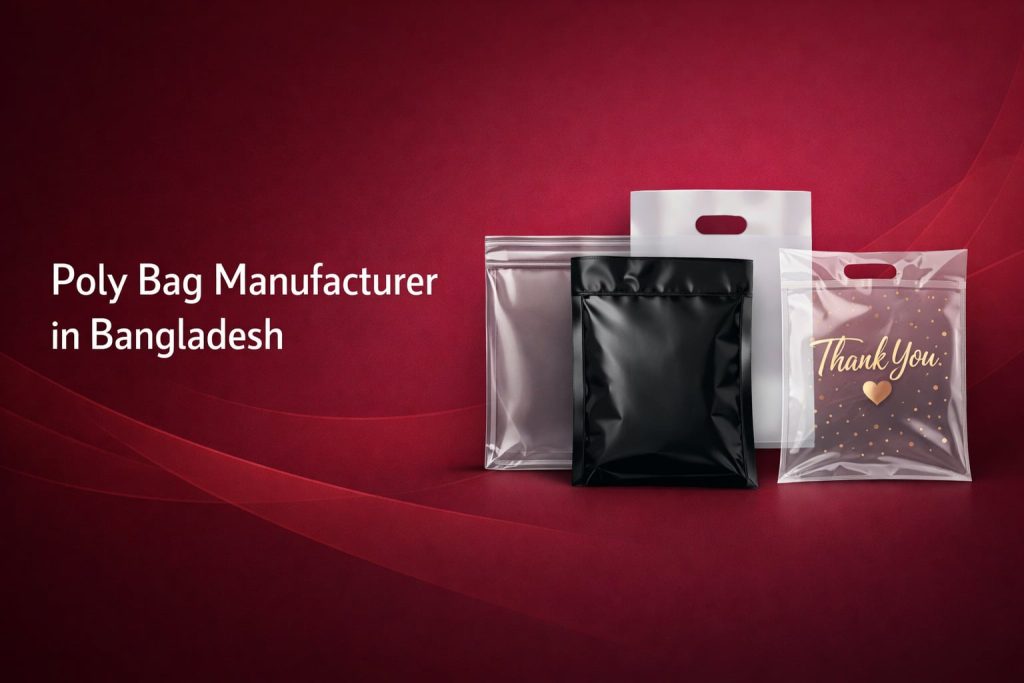
Poly bag factories in Bangladesh produce a wide range of products to serve different industries and applications, from retail to pharmaceuticals. The most common types include High-Density Polyethylene (HDPE), Low-Density Polyethylene (LDPE), and Polypropylene (PP) bags, each with unique properties suited for specific uses.
Export-led industries: Bangladesh’s garment sector ships billions of units annually. Nearly all of these products are packed in poly bags before export. This alone accounts for a massive share of the country’s poly bag consumption.
Retail and e-commerce growth: Domestic retail and the emerging e-commerce market are fueling demand for packaging at the consumer level. As online shopping grows in Dhaka and other urban centers, so does the need for protective, lightweight packaging.
Food and agriculture: Bangladesh is a major producer of rice, vegetables, and seafood. These industries require bulk poly bags for storage and transport, driving demand from the agricultural supply chain.
Pharmaceutical sector: The country’s growing pharmaceutical industry depends on poly bags for blister packaging, sachet production, and product storage, adding another layer of demand.
The combination of these sectors makes Bangladesh a significant consumer of its own poly bag output, in addition to producing for export markets.
Types of Poly Bags Manufactured in Bangladesh
Understanding the manufacturing process is key for buyers. It allows them to make smart sourcing choices and establish practical quality standards for their orders. Knowing how poly bags are made, from raw material to finished product, ensures that expectations align with the final output.
High-Density Polyethylene (HDPE) Bags: Strong, moisture-resistant, and lightweight. Used widely in retail, grocery, and industrial applications.
Low-Density Polyethylene (LDPE) Bags: More flexible and transparent than HDPE, these are commonly used for garment packaging, dry cleaning, and food storage.
Polypropylene (PP) Bags: Known for their clarity and stiffness, PP bags are popular in retail packaging and gift bags.
Zipper/Resealable Bags: Used in food packaging and consumer goods where repeated opening and closing is required.
Garbage and Waste Bags: Heavy-duty bags produced for municipal, commercial, and industrial waste management.
Courier and Mailer Bags: Tamper-evident, lightweight bags used by logistics companies and e-commerce businesses.
Flat Poly Bags: Simple, open-ended bags used extensively in garment packing and light industrial applications.
Gusseted Bags: These bags have expandable sides for bulkier items and are common in the food and textile sectors.
Each bag type requires different resin grades, film thicknesses, and production techniques, and Bangladesh’s manufacturers have developed expertise across all major categories.
How Poly Bags Are Made: The Manufacturing Process
Understanding the manufacturing process helps buyers make informed sourcing decisions and set realistic quality expectations.
1. Raw Material Procurement: Production begins with sourcing polymer granules, primarily HDPE, LDPE, or PP resins. Most raw materials are imported from petrochemical producers in the Middle East, China, or India.
2. Film Extrusion: Polymer granules are melted and extruded through a circular die to form a thin plastic film. The film is then cooled and wound into rolls.
3. Printing: Rolls of film pass through flexographic or gravure printing machines to apply branding, logos, barcodes, or product information.
4. Cutting and Sealing: Film rolls are cut into the appropriate dimensions and heat-sealed at the bottom (and sides for gusseted bags) using automated sealing machines.
5. Quality Control: Each batch is inspected for seal strength, film thickness, print quality, and dimensional accuracy.
6. Packing and Dispatch: Finished bags are bundled, boxed, and prepared for delivery to the customer or export.
Modern poly bag factories in Bangladesh increasingly use automated extrusion lines and digital printing systems, improving consistency and reducing waste across production runs.
Environmental Challenges Facing the Industry
The poly bag industry in Bangladesh faces significant environmental scrutiny. Single-use plastic bags are a major source of pollution in the country’s waterways, urban areas, and agricultural land. Bangladesh actually made global headlines in 2002 when it became one of the first countries to ban polythene shopping bags, citing their role in blocking drainage systems during annual floods.
Despite this, enforcement remains inconsistent, and plastic bag use persists in many parts of the country. Manufacturers and environmental groups are navigating several key challenges:
- Waste management: Bangladesh lacks comprehensive plastic waste collection and recycling infrastructure, leading to widespread littering and landfill overflow.
- Regulatory compliance: Navigating Bangladesh’s plastic regulations can be complex, particularly for exporters who also need to meet the environmental standards of destination markets in Europe and North America.
- Consumer behavior: Shifting consumer habits away from single-use plastics takes time and requires education alongside regulatory pressure.
On a more positive note, a growing number of plastic packaging suppliers in Bangladesh are investing in recycled content, biodegradable additives, and closed-loop production models. The demand for eco-friendly packaging from global buyers is increasingly driving this shift.
You can also read: Clothing Manufacturers in Bangladesh
Future Opportunities in the Sector
Despite its environmental challenges, the poly bag manufacturing industry in Bangladesh has a strong growth trajectory ahead of it. Several opportunities are reshaping the sector:
Sustainable packaging: International buyers, particularly from the EU and the US, are requiring suppliers to use recyclable or compostable packaging materials. Bangladeshi manufacturers who can certify sustainable production methods will gain a competitive edge.
Export diversification: Currently, a large share of Bangladesh’s poly bag output serves the local garment sector. Diversifying into markets like food packaging, medical packaging, and agricultural films opens up new revenue streams.
Technology upgrades: Adoption of modern extrusion and printing technologies improves quality consistency and allows manufacturers to compete for premium contracts.
Government support: Bangladesh’s government has shown interest in supporting the broader packaging sector as part of its industrialization agenda. Incentives for export-oriented manufacturers and special economic zones (SEZs) could accelerate investment.
Recycling infrastructure: Investment in domestic plastic recycling facilities would reduce raw material import costs and improve the industry’s environmental footprint simultaneously.
10 Poly Bag Manufacturers in Bangladesh
If you’re looking to source from a poly bag manufacturer in Bangladesh, here’s a starting point. These companies represent a cross-section of the industry, from large-scale exporters to specialized producers.
- Partex Plastic Industries Ltd. One of Bangladesh’s largest plastic manufacturers, Partex produces a comprehensive range of poly bags for garment, retail, and industrial use. Known for consistent quality and export-ready production standards.
- Bengal Poly & Paper Sack Ltd. A reputable plastic packaging supplier in Bangladesh, Bengal Poly serves both domestic and international clients, offering HDPE, LDPE, and PP bag solutions.
- Sonali Packaging Ltd. Specializes in garment packaging, producing flat and perforated poly bags in large volumes for the RMG sector.
- Pacific Packages Ltd. Focused on food-grade and pharmaceutical-grade packaging, Pacific Packages has built a reputation for hygiene compliance and print quality.
- Meghna Poly Industries A mid-sized poly bag factory in Bangladesh that serves local retail chains and export clients with customized bag solutions.
- Shahjalal Poly Bag Industries Known for producing high-volume, cost-competitive poly bags, primarily for the domestic agricultural and grocery sectors.
- National Polymer Industries Ltd. Produces a wide range of flexible packaging products, including zipper bags, courier mailers, and heavy-duty industrial bags.
- Globe Packaging Ltd. A growing player in the Bangladeshi packaging space, Globe Packaging offers sustainable packaging options and has invested in eco-friendly film production.
- Walton Plastics Division Part of the larger Walton Group, this division manufactures poly bags primarily for the group’s own electronics and appliance products but also serves third-party clients.
- ACS Textiles (Bangladesh) Ltd. While primarily a textile company, ACS operates a packaging division that produces garment-specific poly bags for its export operations, with capacity available for external orders.
Note: Always conduct independent due diligence before entering into a supplier relationship. Factory certifications, compliance records, and production capacity should be verified directly.
You can also read: Plastic Bottle Manufacturer in Bangladesh
Where the Poly Bag Industry Goes From Here
Bangladesh’s poly bag manufacturing industry stands at an inflection point. The fundamentals are strong: established infrastructure, cost advantages, and deep integration with one of the world’s largest garment export ecosystems. At the same time, environmental regulations are tightening globally, and buyers are raising their standards.
The manufacturers that will thrive are those investing in cleaner production, sustainable materials, and export market diversification. For buyers and investors, Bangladesh remains one of the most compelling sourcing destinations in Asia for plastic packaging, provided you choose partners who are building with the future in mind.
Researching suppliers is the critical first step. Use this guide as a foundation, and always verify certifications, compliance status, and production capabilities directly with any poly bag factory in Bangladesh before committing to an order.