Why do we choose one brand over another?
What makes a customer pause, consider, and finally click the “buy now” button? The answers are not always logical or straightforward.
They lie deep within the complex world of buyer psychology, a field that explores the mental and emotional processes that drive purchasing decisions. For marketers and business owners, understanding these internal drivers is the key to creating strategies that resonate, build customers loyalty, and ultimately, convert.

This article dives into the core elements of buyer psychology. We will explore how emotions shape decisions, why cognitive biases lead us down certain paths, and what makes a customer trust a brand. With actionable insights and real-world examples, you will learn how to apply these principles to your own marketing efforts.
Core Elements of Buyer Psychology
Understanding the core elements of buyer psychology involves examining the intricate relationship between emotions, biases, and decision-making processes. At its foundation, emotions play a powerful role in shaping consumer behavior. Buyers often rely on emotional triggers such as excitement, fear, or the desire for belonging when making choices. Cognitive biases further influence these decisions, with phenomena like the scarcity effect driving urgency or the anchoring effect shaping perceptions of value. Trust is another vital component that governs purchasing behavior; when customers feel confident in a brand’s authenticity, reliability, and social proof, they are more likely to convert.
Additionally, the principle of reciprocity a natural inclination to return favors can be a subtle yet effective lever in creating positive brand interactions.
By truly understanding these psychological drivers and incorporating them into marketing strategies, businesses can foster stronger connections with their audience while encouraging meaningful engagement and loyalty.
- Emotions Drive Decisions
Human decisions, including purchasing choices, are heavily influenced by emotions. Products and services that evoke positive emotions—such as joy, trust, or excitement—are more likely to create a lasting connection with customers. Marketers can leverage emotional appeals through storytelling, visual branding, and customer-centric communication to foster stronger engagement. - Cognitive Biases Shape Behavior
Cognitive biases are mental shortcuts that influence how people perceive and interact with information. For example, the “scarcity principle” makes customers more likely to act when they believe a product is limited in quantity or availability. Similarly, the “bandwagon effect” means customers are more inclined to buy products that others are purchasing, highlighting the importance of social proof in marketing strategies. - The Role of Trust
Trust is a foundational element of buyer psychology. Customers are more likely to engage with brands that demonstrate transparency, consistency, and credibility. Features like secure payment gateways, customer reviews, certifications, and clear communication help build trust. A trustworthy brand reduces the perceived risk of purchasing, leading to higher conversions. - The Power of Perception
How customers perceive a brand significantly impacts their buying decisions. Perception can be crafted through branding, messaging, and customer experiences. A company that positions itself as innovative, reliable, or premium is likely to attract a targeted audience whose values align with that image. - The Need for Personalization
Modern consumers expect brands to understand and address their individual needs. Personalization, whether through tailored recommendations, targeted advertising, or customized offerings, enhances the buying experience by making customers feel valued. This approach not only improves satisfaction but also fosters loyalty in the long term.
Understanding these core elements equips marketers with the tools to craft strategies that resonate deeply with their audience, ultimately driving more meaningful connections and sustainable growth.
The Power of Emotion in Decision-Making
It’s a common misconception that buying decisions are purely rational. While logic and features play a role, research consistently shows that emotions are the dominant force. Customers often make decisions based on how a product or service makes them feel. They then use logic to justify that emotional choice.
Think about a luxury car advertisement. It rarely focuses on fuel efficiency or engine specifications. Instead, it sells a feeling: prestige, freedom, success, or security. The goal is to create a strong emotional connection that transcends the product’s functional benefits.
Marketing Applications:
- Emotional Storytelling: Use brand stories and customer testimonials that evoke positive emotions like happiness, inspiration, or relief. TOMS Shoes built an empire on the powerful feeling of doing good, promising to donate a pair of shoes for every pair purchased.
- Visual Impact: Use colors, images, and videos that align with the emotions you want to trigger. A spa might use serene blues and greens to create a sense of calm, while a tech startup might use vibrant, energetic colors to convey innovation.
- Focus on Benefits, Not Just Features: Instead of listing what your product does, explain how it will improve the customer’s life. A feature is a high-resolution camera; a benefit is capturing precious family memories in stunning detail.
Decoding Customer Decision-Making Patterns
Customers typically follow a predictable journey before making a purchase. While the exact steps can vary, the general pattern includes problem recognition, information search intent, evaluation of alternatives, the purchase decision, and post-purchase behavior. Understanding where your customer is in this process allows you to provide the right information at the right time.
For example, a person whose old laptop is slowing down (problem recognition) will start searching for reviews and comparisons online (information search). They will then weigh options from brands like Apple, Dell, and HP (evaluation of alternatives) before making a final choice.
Marketing Applications:
- Content Mapping: Create content tailored to each stage of the buyer’s journey. Use blog posts and social media to help customers recognize a problem. Offer detailed guides, webinars, and comparison charts during their information search. Use case studies and free trials to aid in the evaluation stage.
- Simplify the Choice: Too many options can lead to “analysis paralysis,” where the customer feels overwhelmed and makes no decision at all. Curate your offerings and guide customers toward the best solution for their needs. Netflix’s “Top 10” list is a perfect example of simplifying choice for users.
How Cognitive Biases Influence Buying Behavior
Cognitive biases are mental shortcuts our brains use to make decisions quickly. These subconscious thought patterns significantly influence what we buy, how much we are willing to pay, and which brands we prefer. Marketers who understand these biases can ethically use them to guide customer behavior.
Key Cognitive Biases in Marketing:
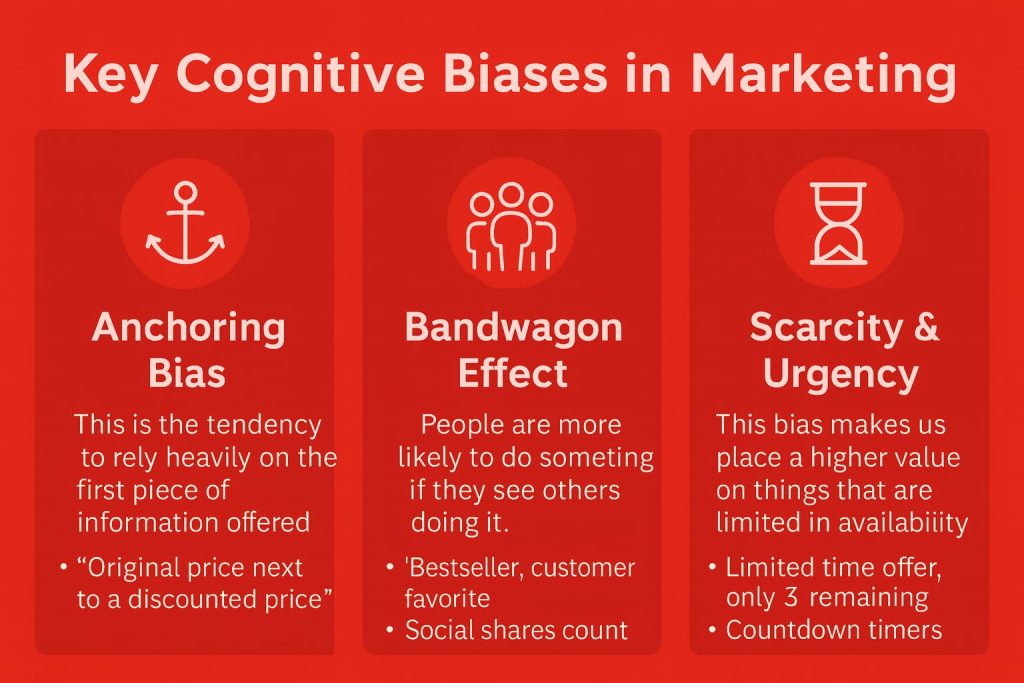
- Anchoring Bias: This is the tendency to rely heavily on the first piece of information offered. When you see a product’s original price listed next to a discounted price, the original price acts as an anchor, making the sale price seem much more attractive.
- Bandwagon Effect: People are more likely to do something if they see others doing it. Phrases like “bestseller,” “customer favorite,” and displaying social share counts tap into this desire to be part of a crowd. Amazon’s “Customers who bought this item also bought” feature is a classic example.
- Scarcity and Urgency: This bias makes us place a higher value on things that are limited in availability. “Limited time offer,” “Only 3 left in stock,” and countdown timers all create a sense of urgency that encourages immediate action.
Marketing Applications:
- Strategic Pricing: Display a higher “original” price next to your sale price to anchor the customer’s perception of value.
- Show Social Proof: Feature customer reviews, testimonials, user-generated content, and partner logos prominently on your website.
- Create Scarcity: Use limited-edition products or time-sensitive deals to motivate hesitant buyers. Booking.com excels at this by showing messages like “Only 1 room left at this price.”
The Role of Motivation Triggers
What truly motivates a customer to act?
Motivations can be either intrinsic (driven by internal rewards like a sense of accomplishment) or extrinsic (driven by external rewards like discounts or praise). Most buying decisions are fueled by a desire to either gain pleasure or avoid pain.
These two core motivations are powerful drivers. A person might buy a gym membership to gain the pleasure of better health and confidence, or to avoid the pain of future health problems. Understanding your customer’s primary motivation helps you frame your product as the ultimate solution.
Marketing Applications:
- Highlight the “Gain”: Focus your messaging on what customers will achieve with your product. This could be more time, more money, greater status, or better health. Language learning apps like Duolingo use gamification and streaks to tap into the user’s desire for achievement and progress.
- Solve the “Pain”: Clearly identify a common customer pain point and position your product as the specific remedy. A cybersecurity company doesn’t just sell software; it sells peace of mind and protection from the pain of a data breach.
Building Trust: The Foundation of Every Sale
In a crowded marketplace, trust is the ultimate currency of a brand. A customer who trusts your brand is more likely to buy from you, spend more, and become a loyal advocate, which significantly contributes to your brand equity. Trust signals are the elements that show customers your business is credible, reliable, and secure.
These signals can be explicit, like security badges and return policies, or implicit, like professional website design and transparent communication. Every interaction a customer has with your brand either builds or erodes trust.
Essential Trust Signals:
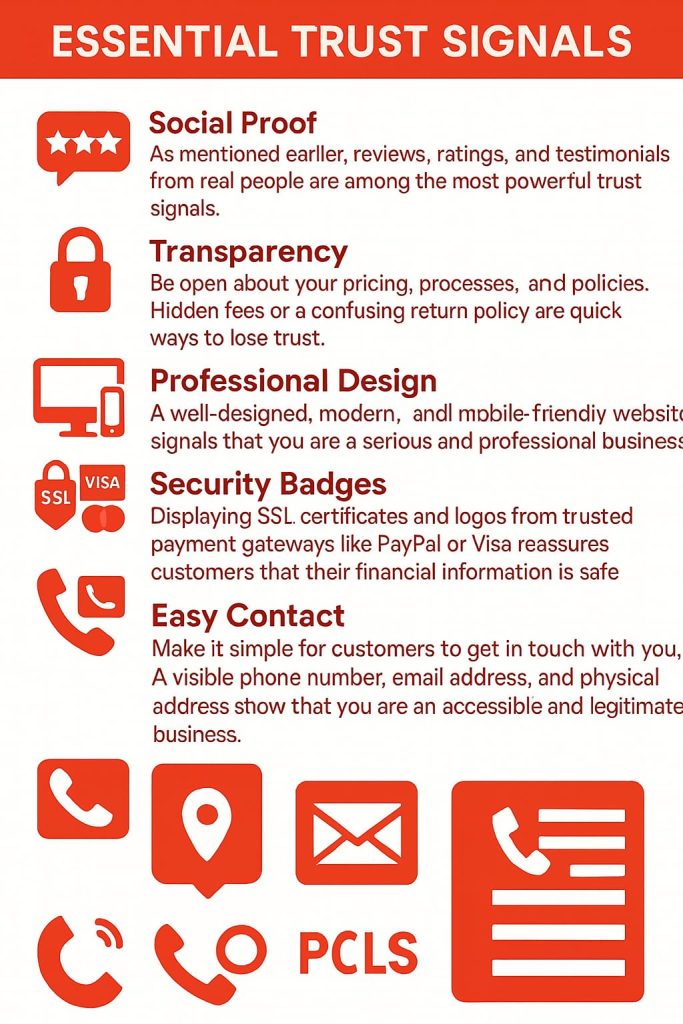
- Social Proof: As mentioned earlier, reviews, ratings, and testimonials from real people are among the most powerful trust signals.
- Transparency: Be open about your pricing, processes, and policies. Hidden fees or a confusing return policy are quick ways to lose trust.
- Professional Design: A well-designed, modern, and mobile-friendly website signals that you are a serious and professional business.
- Security Badges: Displaying SSL certificates and logos from trusted payment gateways like PayPal or Visa reassures customers that their financial information is safe.
- Easy Contact: Make it simple for customers to get in touch with you. A visible phone number, email address, and physical address show that you are an accessible and legitimate business.
Marketing Applications:
- Showcase Customer Feedback: Make reviews and testimonials a central part of your product pages and website.
- Create a Clear FAQ Page: Proactively answer common questions and be transparent about your shipping, return, and privacy policies.
- Invest in Quality Design: Ensure your website and all marketing materials are professional, error-free, and consistent with your brand identity.
Putting Buyer Psychology to Work
Understanding buyer psychology isn’t about manipulation; it’s about empathy. It’s about seeing the world through your customer’s eyes and aligning your message with their innate emotional and cognitive processes. This alignment is a key part of any effective brand communication strategy.
By appealing to emotion, simplifying decision-making, acknowledging cognitive biases, tapping into core motivations, and building a foundation of trust, you can create marketing that is not only more effective but also more meaningful. Start by analyzing one aspect of your current strategy. Could you tell a more emotional story?
Could you add more social proof to your website?
Small, psychology-informed changes can lead to significant improvements in how customers connect with and respond to your brand.