Running a business without a local marketing strategy is like opening a store in a busy neighborhood but forgetting to put up a sign. You might have the best products or services, but if people in your area don’t know you exist, you’re missing out on a massive opportunity. To strengthen your local presence and reach more customers effectively, explore these proven strategies for market penetration to scale your marketing funnel towards success.
Local marketing isn’t just for brick-and-mortar stores anymore. Whether you run a coffee shop, a law firm, a plumbing service, or an e-commerce business with local delivery, connecting with customers in your geographical area can transform your bottom line. Studies show that 46% of all Google searches are looking for local information, and 78% of local mobile searches result in an offline purchase within 24 hours.

This guide will walk you through everything you need to know about local marketing strategy. You’ll discover what it is, why it matters, and most importantly, 15 actionable local marketing tactics you can implement right away to attract more customers and grow your business.
By the end, you’ll have a clear roadmap to increase your visibility, build community connections, and drive real revenue from your local market.
What is Local Marketing?
Local marketing is the practice of promoting your business to customers within a specific geographical area. Instead of casting a wide net to reach everyone everywhere, you focus your efforts on the people who are most likely to walk through your door, call your office, or visit your website because they’re nearby.
Think of it as community-based promotion. You’re not trying to compete with national chains or global corporations on their terms. Instead, you’re leveraging your proximity, your local knowledge, and your community relationships to create meaningful connections with nearby customers.
Local marketing encompasses both traditional methods (like sponsoring a little league team or distributing flyers) and digital tactics (such as optimizing for “near me” searches or running geo-targeted social media ads). The key difference from broader marketing approaches is the geographical focus. Every strategy, message, and campaign is designed with your local audience in mind.
What is a Local Marketing Strategy?
A local marketing strategy is your comprehensive plan for reaching and engaging customers in your specific geographic area. It’s not just a collection of random tactics, it’s a coordinated approach that aligns your business or brand goals with the needs and behaviors of your local community.
Your strategy should answer critical questions: Who are your local customers? Where do they spend their time online and offline? What problems do they need solved? How can your business become the obvious choice when they’re ready to buy?
An effective local marketing strategy typically includes several components working together. You’ll need a strong online presence optimized for local search, an active social media strategy that engages your community, partnerships with other local businesses, and possibly traditional advertising in local publications or events. The most successful strategies blend digital and traditional approaches based on where your specific audience can be reached most effectively.
Global Marketing vs Local Marketing
Understanding the distinction between global marketing and local marketing helps you allocate resources wisely and set realistic expectations.
Global marketing aims to reach customers across multiple countries, regions, or even worldwide. Companies using this approach often standardize their messaging, branding, and products to maintain consistency across markets. Think of brands like Coca-Cola, Apple, or Nike—their marketing speaks to universal human desires and emotions that transcend geographical boundaries.
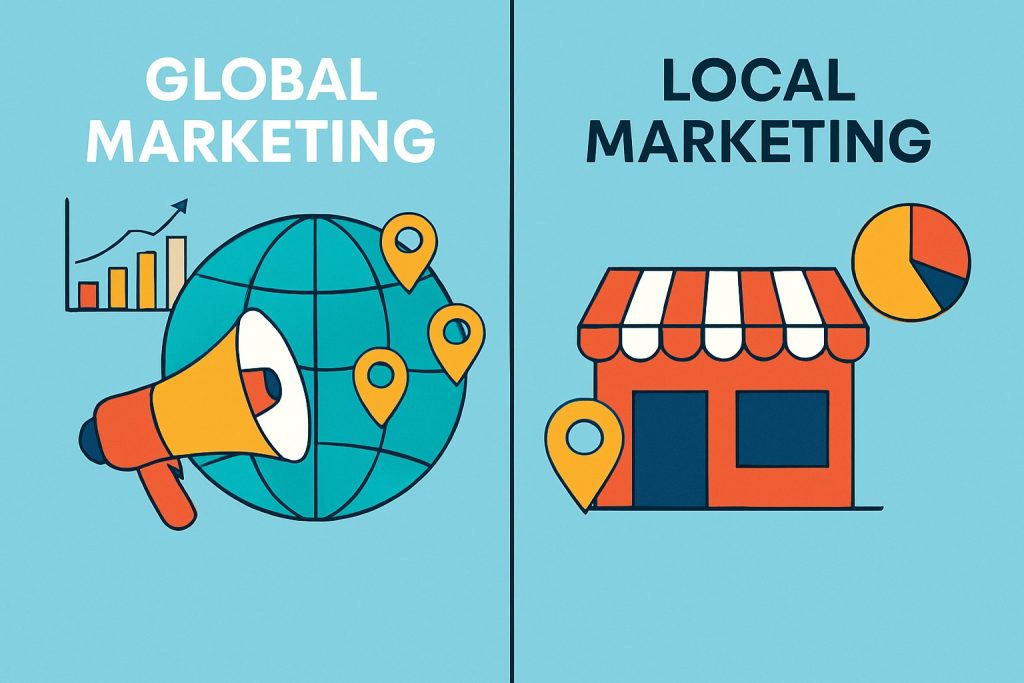
Local marketing, by contrast, focuses on a specific city, neighborhood, or region. Your messaging reflects local culture, values, and needs. You might reference local landmarks, sponsor neighborhood events, or adjust your product offerings based on regional preferences.
The scale is obviously different. Global marketing requires massive budgets, extensive market research across cultures, and complex logistics. Local marketing works with smaller budgets and more intimate knowledge of your community.
Perhaps the biggest difference lies in competition and positioning. With global marketing, you’re competing against every similar business worldwide. Local marketing business owners compete primarily with other nearby options. A local coffee shop doesn’t need to outmarket Starbucks globally—they just need to become the preferred choice for their neighborhood.
Neither approach is inherently better. Many successful businesses use both. A restaurant chain might have a global marketing strategy for brand recognition while individual locations implement local marketing tactics to drive foot traffic. The right mix depends on your business model, resources, and growth objectives.
What Types of Businesses Benefit From Local Marketing?
Almost any business can benefit from local marketing tactics, but some see particularly strong results.
Service-based businesses are natural fits for local marketing. Plumbers, electricians, HVAC technicians, lawyers, accountants, and consultants typically serve clients within a defined geographic radius. When your toilet breaks at midnight or you need tax advice, you’re searching for someone nearby who can help quickly.
Retail stores obviously benefit from local foot traffic. Whether you sell clothing, furniture, groceries, or specialty items, attracting nearby shoppers is essential. Even if you have an online presence, many customers prefer to see, touch, and try products before buying.
Restaurants, cafes, and bars thrive on local customers becoming regulars. Building a loyal neighborhood following creates consistent revenue and word-of-mouth promotion. Local marketing examples in this category include promoting daily specials to nearby office workers or hosting community events.
Healthcare providers, dentists, doctors, chiropractors, physical therapists—rely heavily on local patients. People generally choose healthcare providers close to home or work for convenience, especially for routine appointments.
Home service providers like landscapers, house cleaners, dog walkers, and home organizers serve specific geographic areas. Their business model depends on efficiently routing between nearby clients.
Gyms and fitness studios need members who live or work nearby. Nobody wants a 45-minute commute to their workout. Creating a sense of local community within your facility strengthens retention.
Real estate agents and property managers work within specific neighborhoods or cities. Their success depends on becoming the go-to expert for their local market.
Even e-commerce businesses can benefit from local marketing if they offer local delivery, pickup options, or serve a regional market. A bakery that ships nationwide might still focus local marketing efforts on their city to build a customer base that orders regularly and provides valuable feedback.
15 Local Marketing Strategies You Can Start Tomorrow
Ready to significantly boost your local presence and connect more effectively with customers in your area? The following strategies are not only proven to deliver measurable results but are also designed to be accessible, meaning they don’t require massive budgets or specialized technical expertise to implement successfully. These actionable insights will help you strengthen your community ties and drive local engagement.
1. Claim and Optimize Your Google Business Profile
Your Google Business Profile (formerly Google My Business) is arguably the most important local marketing tool available. When someone searches for your business type plus your location, Google displays a map with local options. Your profile determines whether you appear in that coveted map pack.
Start by claiming your profile if you haven’t already. Complete every section: business name, address, phone number, website, hours, categories, and description. Add high-quality photos of your location, products, and team. Encourage customers to leave reviews and respond to all of them promptly.
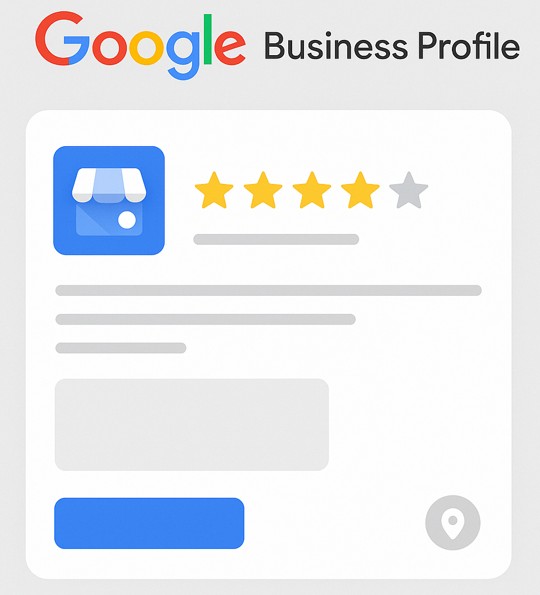
Keep your information current. Update holiday hours, add posts about special promotions, and use Google’s Q&A feature to answer common questions. Businesses with complete, active profiles see significantly higher engagement and conversion rates.
2. Build Local Citations
Local citations are online mentions of your business name, address, and phone number (NAP). They appear on directory sites like Yelp, Yellow Pages, TripAdvisor, and industry-specific platforms.
Consistent citations across multiple reputable sites signal to search engines that your business is legitimate and established. This improves your local search rankings. Start with major directories, then add industry-specific sites relevant to your business type.
Accuracy matters enormously. Ensure your NAP information is identical across all platforms. Even minor variations (like “St.” versus “Street”) can confuse search engines and hurt your rankings.
3. Encourage and Manage Customer Reviews
Reviews influence purchasing decisions more than almost any other factor. Eighty-eight percent of consumers trust online reviews as much as personal recommendations.
Actively request reviews from satisfied customers through follow-up emails, receipts, or in-person requests. Make the process simple by providing direct links to your review profiles. Focus on Google, Yelp, Facebook, and industry-specific platforms where your customers already spend time.
Respond to every review, positive and negative. Thank customers for positive feedback and address concerns in negative reviews professionally and constructively. This demonstrates that you value customer input and are committed to improvement.
Never buy fake reviews or incentivize positive reviews in ways that violate platform policies. Authenticity builds trust; manipulation destroys it.
4. Create Location-Specific Content
If you serve multiple locations, create dedicated pages for each area.
Don’t just duplicate content and swap out city names search engines penalize that approach.
Write unique content for each location that addresses specific local needs, references local landmarks, and includes location-specific keywords. For example, a roofing company might create separate blog posts about “Preparing Your Phoenix Roof for Monsoon Season” and “Winter Roof Maintenance Tips for Flagstaff Homes.”
Include local keywords naturally throughout your website. If you’re a dentist in Austin, incorporate phrases like “Austin family dentist,” “dental care in Travis County,” or “downtown Austin dental office” in your content, headers, and meta descriptions.
Local content also includes blog posts about community events, local news related to your industry, or profiles of local customers (with permission). This positions you as an engaged community member, not just another business trying to make a sale.
5. Leverage Local SEO
Local SEO extends beyond simply adding your city name to your website. Technical optimization ensures search engines understand your location and relevance for local searches.
Add schema markup (structured data) to your website. This code helps search engines understand your business type, location, hours, and other key details. While it sounds technical, many website platforms offer plugins that simplify this process.
Ensure your website is mobile-friendly. Most local searches happen on smartphones. If your site doesn’t load quickly or display properly on mobile devices, potential customers will bounce to competitors.
Build quality backlinks from other local websites. Partner with local bloggers, get featured in local news sites, or exchange links with complementary businesses. Local backlinks carry significant weight in local search rankings.
- Leverage Google My Business (GMB): Claim and optimize your GMB profile with accurate business information, high-quality images, and regular updates to improve local visibility.
- Encourage Customer Reviews: Actively request reviews from satisfied customers and respond promptly to feedback to build trust and boost search rankings.
- Utilize Local Keywords: Integrate location-based keywords naturally into your website content, meta descriptions, and headers for better local SEO performance.
- Create Location-Specific Content: Develop blog posts or videos focused on local events, culture, or topics to engage your community and improve relevance.
- Optimize for Voice Search: Tailor your content to common voice search phrases, often longer and conversational, to capture nearby customers using smart devices.
- Use Local Schema Markup: Add structured data to your site to provide search engines with clear context about your business details like locations, hours, and services.
6. Use Geo-Targeted Social Media Advertising
Social media platforms offer precise location targeting for ads. You can reach people within a specific radius of your business, target certain ZIP codes, or focus on users in particular cities.
Facebook and Instagram ads allow you to create campaigns specifically for people in your area. You might promote a weekend sale to users within 10 miles of your store or direct advertise or targeting specific customer by make a social media marketing strategic campaign for your catering services to people in neighborhoods you serve.
Use local imagery and references in your ad creative. Feature recognizable local landmarks, mention neighborhood names, or reference local events to create immediate connection and relevance.
7. Partner With Other Local Businesses
Collaboration creates win-win opportunities. Identify non-competing businesses that serve the same target audience and explore partnership possibilities.
Cross-promote each other’s services. A yoga studio might partner with a healthy cafe, a wedding photographer with a florist, or a bookstore with a coffee shop. Share each other’s social media posts, include flyers at each other’s locations, or create bundled offerings.
Co-host events that bring both customer bases together. A hardware store and a home decor boutique could host a DIY workshop. A gym and a nutritionist could offer a wellness seminar.
These partnerships expand your reach, build community connections, and often result in high-quality referrals since you’re recommended by a trusted source.
8. Sponsor Local Events and Organizations
Community involvement builds brand recognition and goodwill. Sponsor a little league team, support a local charity run, or underwrite a community festival.
Your sponsorship doesn’t need to be huge. Even modest contributions to meaningful causes create positive associations with your brand. Attendees see your business supporting their community, which builds trust and loyalty.
Make sure you’re actually present at events you sponsor. Set up a booth, talk with attendees, offer samples or demonstrations. Personal interaction at community events creates memorable impressions that purely digital marketing can’t replicate.
9. Host Local Events or Workshops
Become a community gathering place by hosting events related to your business. A garden center could offer seasonal planting workshops. A bookstore might host author readings. A fitness studio could organize a charity workout.
Educational workshops position you as an expert while providing genuine value to your community. Attendees learn something useful and develop positive associations with your brand.
Events also generate social media content. Encourage attendees to share photos and tag your business. This creates organic promotion that reaches their networks.
10. Implement Local Email Marketing
Build an email list of local customers and prospects to run your email marketing campaign. Offer an incentive for signups, such as a discount, free resource, or exclusive content.
Segment your list by location if you serve multiple areas. This allows you to send targeted messages about location-specific promotions, events, or news.
Include local content in your newsletters. Share updates about your community involvement, feature local customer stories, or provide tips relevant to your area (like seasonal advice that applies to your specific climate).
Promote local events, sales, or new products launching at specific locations. Email remains one of the most effective marketing channels, with an average ROI of $42 for every dollar spent.
11. Use Local Influencer Marketing
You don’t need celebrity endorsements. Micro-influencers with strong local followings can be incredibly effective and affordable.
Identify local social media users who have engaged audiences in your area. These might be food bloggers, lifestyle influencers, or community leaders with a few thousand followers who genuinely connect with their audience.
Reach out with collaboration ideas. Offer your product or service in exchange for honest coverage. The authenticity of their recommendation to a local audience carries significant weight.
Local influencers often charge much less than national influencers and deliver better results for local businesses because their followers are actually in your market.
12. Create Video Content Showcasing Your Local Business
Video content generates higher engagement than text or images alone. Use video to showcase your business personality, demonstrate your products or services, and tell your local story.
Create video tours of your location. Show behind-the-scenes glimpses of your operation. Introduce your team members. Feature satisfied local customers sharing their experiences (with permission).
Share these videos on your website, social media platforms, YouTube, and in email campaigns. Optimize video titles and descriptions with local keywords to improve discoverability.
Live video on platforms like Facebook and Instagram creates real-time engagement with your local community. Host live Q&As, stream from local events you’re attending, or provide updates about new offerings.
- Showcase behind-the-scenes content to highlight your authenticity and build trust with your audience.
- Create short, engaging tutorials or how-to videos that solve common problems or inspire creativity.
- Collaborate with local influencers or creators to expand your reach within the community.
- Leverage trending topics and seasonal themes to keep your content timely and relevant.
- Include clear calls-to-action in your videos, encouraging viewers to visit your store, website, or social media pages.
- Monitor video performance analytics to identify what resonates most with your audience and optimize future content.
13. Offer Location-Based Promotions
Create special offers specifically for people in your area. Use geo-fencing technology to send promotions to people’s smartphones when they’re near your location.
Time-sensitive offers create urgency. “Show this text within the next two hours for 20% off” encourages immediate action rather than “I’ll check that out someday.”
Create loyalty programs that reward local customers for repeat business. A simple punch card for your tenth free coffee or a digital app that tracks visits and offers rewards keeps customers coming back.
Partner with apps like Groupon or LivingSocial to reach deal-seekers in your area, but be strategic about discounting. Deep discounts can attract one-time bargain hunters rather than loyal customers.
14. Optimize for Voice Search
Voice search is growing rapidly, and local queries are especially common. People ask their devices, “Where’s the nearest Italian restaurant?” or “Who does heating repair near me?”
Optimize for conversational, question-based keywords. Voice searches tend to be longer and more specific than typed searches. Include FAQ sections on your website that answer common questions about your business using natural language.
Ensure your Google Business Profile is complete and accurate since voice assistants often pull information directly from these listings.
Focus on featured snippets- the boxed answers that appear at the top of some search results. Voice assistants frequently read these snippets in response to questions. Structure your content to clearly answer specific questions to increase your chances of earning featured snippet positions.
- Use concise and direct language to answer commonly asked questions.
- Include relevant keywords naturally within your content to align with voice search queries.
- Optimize your website for mobile since many voice searches are done on smartphones.
- Leverage FAQs to address specific, commonly searched questions about your services.
- Regularly update your content to reflect current trends and user interests.
15. Track and Measure Your Results
You can’t improve what you don’t measure. Use analytics tools to track which local marketing tactics generate results.
Google Analytics shows where your website traffic comes from. Set up goals to track conversions like form submissions, phone calls, or purchases. Monitor which local keywords bring visitors to your site.
Your Google Business Profile includes insights showing how people find your listing, what actions they take, and where they’re located. Use this data to understand what’s working.
Track offline conversions too. Ask new customers how they heard about you. Use unique phone numbers or promo codes for different marketing channels to identify which generates the most business.
Review your data regularly and adjust your strategy based on what you learn. Double down on tactics that deliver results and eliminate those that don’t.
- Monitor website traffic sources to identify which platforms drive the most engagement.
- Leverage analytics tools to track customer behavior and refine your marketing approach.
- Experiment with different content formats, such as videos, infographics, or short-form posts, to see what resonates most with your audience.
- Use A/B testing to optimize ad performance and improve click-through rates.
- Stay updated on industry trends and adapt your strategy to align with evolving audience preferences.
Think Globally, Act Locally
The businesses that thrive aren’t necessarily the ones with the biggest budgets or the most locations. They’re the ones that create genuine connections with their communities.
Your local marketing strategy should reflect your unique value proposition and your understanding of what matters to your neighbors. Whether you’re serving the best coffee on Main Street, providing emergency plumbing repairs at 2 AM, or helping families find their dream homes, your local marketing connects your capabilities with the people who need them most.
Start with the tactics that align best with your business model and available resources. You don’t need to implement all 15 strategies at once focus on two or three that make the most sense for your situation and execute them effectively. As you begin to see results, you can gradually expand to additional tactics, ensuring they fit within a well-structured business plan that supports long-term growth.
The most important step is simply to start. Every business that dominates their local market today started exactly where you are now.
Your Local Marketing Action Plan
Ready to transform your local presence? Here’s your step-by-step action plan to get started:
Step 1: Conduct a local SEO audit to identify areas for improvement. Review your Google Business Profile, check your local citations for consistency, and analyze your current local search rankings. Understanding where you stand today helps you set realistic goals and measure progress.
Step 2: Optimize your Google Business Profile with complete and accurate information. Add fresh photos, encourage customers to leave reviews, and post regular updates about your business. This single action can dramatically improve your local visibility.
Step 3: Start building local citations on reputable online directories. Focus on accuracy and consistency across all platforms. Include major directories first, then move to industry-specific sites where your customers search.
Step 4: Encourage customer reviews and respond promptly to all feedback. Create a straightforward system for requesting reviews after each positive customer interaction. Remember that your responses to reviews are just as important as the reviews themselves.
Step 5: Create location-specific content for your website and blog. Write about topics that matter to your local audience, reference local landmarks and events, and naturally incorporate location-based keywords throughout your content.
Step 6: Engage with your local community through events and partnerships. Look for opportunities to collaborate with complementary businesses, sponsor community organizations, or host events that bring people together.
Step 7: Track and measure your local marketing efforts using analytics tools. Set up tracking for website traffic, conversions, and customer sources. Review your data monthly and adjust your strategy based on what’s actually working.
Local marketing isn’t a one-time project—it’s an ongoing commitment to your community.
The businesses that consistently show up, provide value, and build relationships are the ones that win in the long run. Your local market is waiting. It’s time to claim your space.